From Molecular Biology Training to Research Leadership: Dr Obaiya Utoblo’s Journey

How continued training, collaboration and scientific networks are supporting a University of Jos researcher working to advance crop improvement and food security in Nigeria.

By JR Biotek Foundation | Alumni Story

Dr Obaiya Grace Utoblo is a researcher and lecturer at the University of Jos, Nigeria, whose work focuses on the genetic improvement of sweet potato and its potential contribution to food and nutrition security in sub-Saharan Africa. Her relationship with JR Biotek Foundation spans several years and several stages of her scientific development, from hands-on plant molecular biology training in Nigeria, to research innovation and an alumni symposium in Ghana, and later advanced training in mycorrhizal mapping and metagenomics.

Her journey offers a window into something JR Biotek Foundation has sought to build over the past decade: scientific capacity that continues to grow beyond a single training programme.

It Began with Hands-On Molecular Biology Training

In 2021, Dr Utoblo was selected as one of 25 African crop scientists to participate in JR Biotek Foundation’s hands-on Plant Molecular Biology Laboratory Training Workshop, delivered in collaboration with the Centre for Dryland Agriculture (CDA) at Bayero University Kano, Nigeria. Supported by the Global Challenges Research Fund and the Department of Plant Sciences at the University of Cambridge, the intensive programme introduced participants to molecular biology techniques relevant to agricultural research.

The workshop combined practical laboratory training with lectures and scientific discussions involving researchers from Cambridge and elsewhere, helping participants strengthen the technical and research skills needed to investigate agricultural challenges relevant to their own contexts.
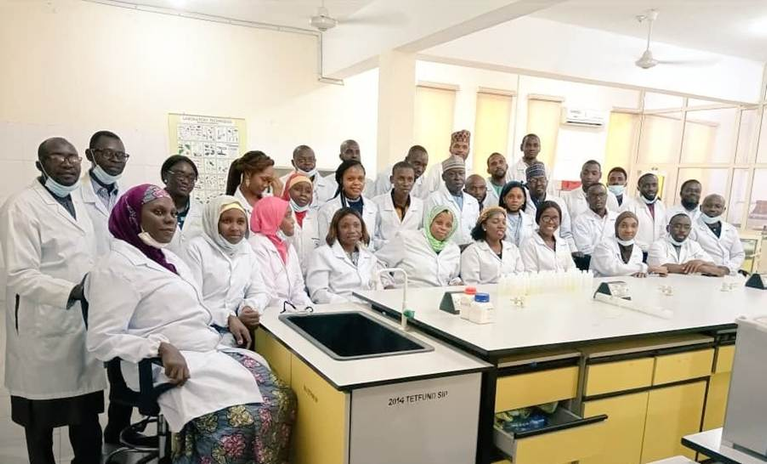
Image: Dr Obaiya Utoblo participating in JR Biotek Foundation’s 2021 Plant Molecular Biology Laboratory Training Workshop at the Centre for Dryland Agriculture, Bayero University Kano, Nigeria.

Taking Research Ideas Beyond the Laboratory

Following the workshop, Dr Utoblo participated in JR Biotek Foundation’s Food Security Symposium and 4th Africa Bio-Innovation Pitch Challenge, which brought together participants from the Foundation’s 2021 programmes in Nigeria, Ghana and Kenya.

Working collaboratively, participants developed research and innovation ideas addressing challenges including hunger, malnutrition and poverty, with connections to the UN Sustainable Development Goals on poverty, hunger and quality education.

For Dr Utoblo, the experience provided an opportunity to develop ideas beyond the laboratory, work with researchers from other African institutions and consider how scientific research could contribute to practical agricultural solutions.

Bringing Indigenous Crop Research into the Conversation

Her involvement with the JR Biotek network continued in October 2022, when she received a JR Biotek Foundation Travel Award to participate in the JR Biotek Alumni Symposium, co-hosted with the CSIR-Crops Research Institute in Kumasi, Ghana.

Themed Advancing Research on Indigenous Crops to Sustainably Meet Pressing Food and Nutrition Security Needs in Africa, the symposium brought together alumni from 15 research institutions across six African countries.

Dr Utoblo presented her research on sweet potato breeding and genetic improvement in Nigeria, contributing to wider discussions about the role of indigenous and locally important crops in strengthening African food and nutrition security.

The symposium also created opportunities for researchers to engage with smallholder farmers, reinforcing the importance of connecting scientific research with farmer experience and the agricultural challenges facing communities.
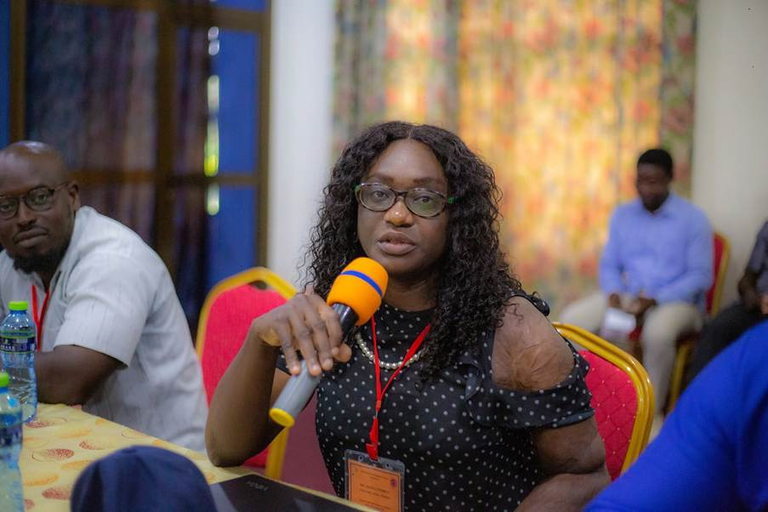
Image: Dr Obaiya Utoblo at the 2022 JR Biotek Foundation Alumni Symposium, hosted at the CSIR-Crops Research Institute in Ghana. She participated as a recipient of a JR Biotek Foundation Research Travel Award.

Expanding into Soil Microbiome Science

Two years later, Dr Utoblo returned to another JR Biotek Foundation scientific programme, this time expanding her experience beyond plant breeding. In 2024, she was selected to participate in the Africa Mycorrhizal Mapping & Metagenomics Workshop, co-developed by JR Biotek Foundation and the Society for the Protection of Underground Networks (SPUN), and delivered in partnership with CSIR-Crops Research Institute in Ghana and Oxford Nanopore Technologies.

The programme provided training in genetics, genomics and bioinformatics approaches for studying mycorrhizal fungal communities and their roles within soils and agricultural ecosystems.

For a scientist whose core work centres on crop improvement, this provided exposure to another important dimension of resilient agriculture: the biological systems beneath the crops themselves.
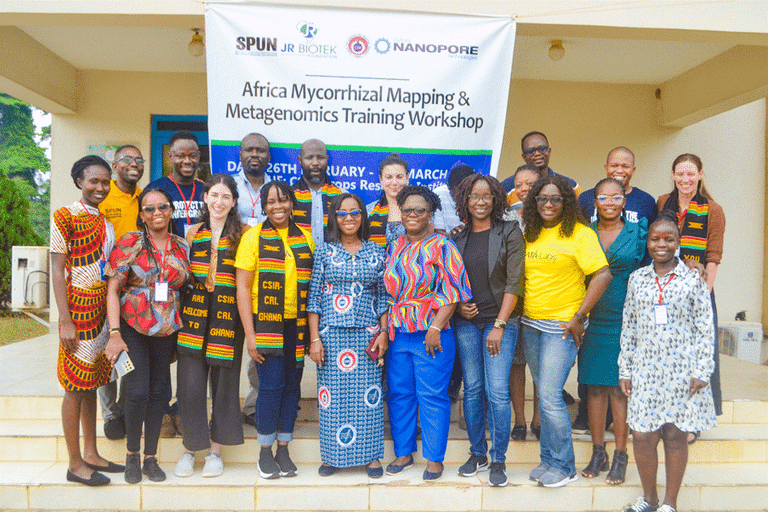
Image: Participants, facilitators and organisers of the Africa Mycorrhizal Mapping & Metagenomics Workshop, co-developed by JR Biotek Foundation and SPUN and delivered in partnership with the CSIR-Crops Research Institute, Ghana.

Continuing the Journey at the University of Jos

Today, Dr Obaiya Grace Utoblo continues her work as a plant breeder, researcher and lecturer at the University of Jos, applying genomic approaches to sweet potato genetic improvement and contributing to research relevant to food and nutrition security in sub-Saharan Africa.

Her research group has also secured a Nigerian Tertiary Education Trust Fund (TETFund) grant to support its research at the University of Jos.

Seen together, the different stages of her journey tell a larger story. A scientist participates in practical molecular biology training. She enters a wider African research network. She presents her work alongside peers and farmers. She gains exposure to new scientific areas and technologies. She takes those experiences back into her research and teaching. 

That is the kind of progression JR Biotek Foundation hopes to enable through sustained scientific capacity building.

The Multiplier Effect

Dr Utoblo’s story is not simply about participation in a series of programmes. It reflects the value of creating opportunities for scientists to keep learning, connecting and applying what they gain within their own institutions.

As a researcher and lecturer, the knowledge and networks she develops have the potential to travel further, into her research, her students, future collaborations and the agricultural challenges her work seeks to address.

Her journey is part of a growing story across the JR Biotek Foundation alumni network: African scientists building their own careers while strengthening the research and educational ecosystems around them.
News & Stories

Stay up to date with our latest scientific training programmes, farmer engagement activities, research and innovation, alumni achievements and partnerships and events.

April 3, 2025

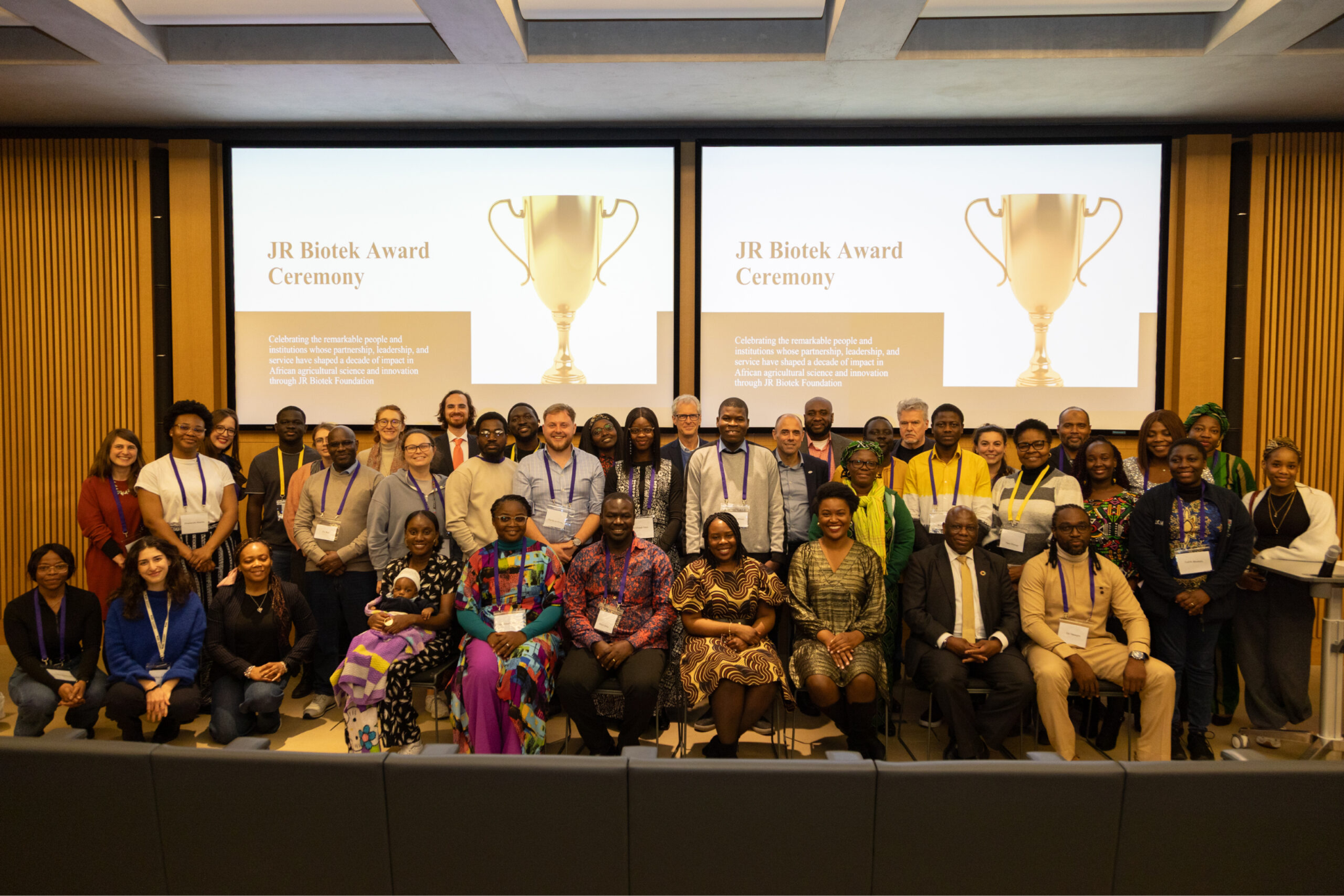
Roots of Resilience: Celebrating a Decade of Science, Partnership and African-Led Innovation

Cambridge, 27 March 2025 — At the University of Cambridge, JR Biotek Foundation marked its tenth anniversary with Roots of Resilience: A Decade of Innovation & Impact, a day-long gathering of scientists, policy experts, business practitioners, artists, alumni and partners from Africa and around the world.
April 5, 2025

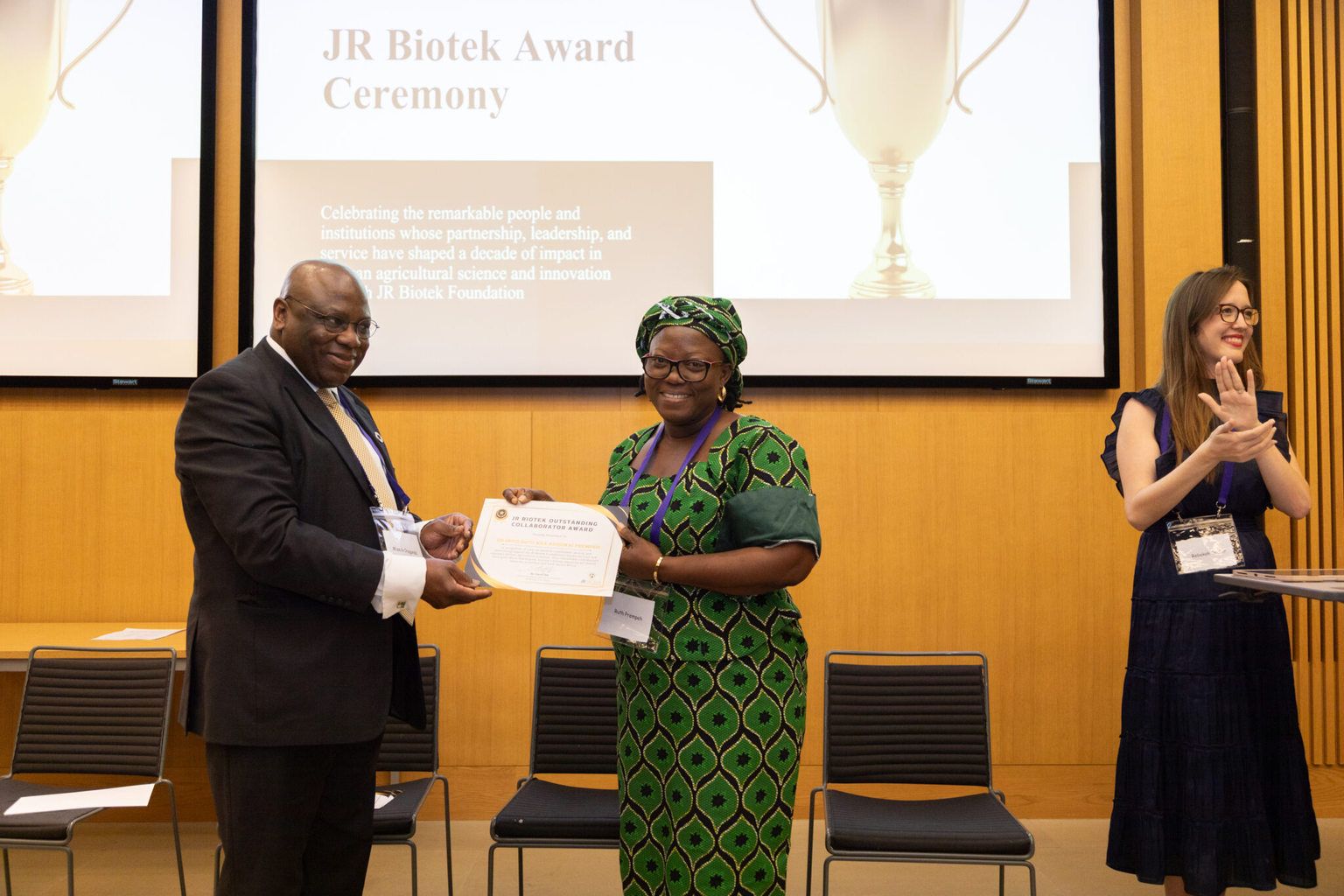
JR Biotek Awards Honour a Decade of Partnership, Service and Excellence in African Science

For ten years, JR Biotek Foundation’s work has been built not only through programmes, but through people, scientists who mentor others, institutions that open their laboratories and networks, volunteers who give their time, and partners who believe that strengthening African science can transform lives and food systems.
October 2, 2025

JR Biotek Foundation Launches AGRIIP: A 10-Year Mission to Reimagine Africa’s Food Future

JR Biotek Foundation has launched the Agri-Innovation & Impact Platform (AGRIIP), an ambitious 10-year initiative bringing together African scientists, farmers, entrepreneurs and institutions to develop science-backed solutions to some of the most pressing challenges facing African agriculture and food systems.
Scroll to Top

Subscribe to our newsletter

* indicates required
Consent & Privacy

From Molecular Biology Training to Research Leadership: Dr Obaiya Utoblo’s Journey

By JR Biotek Foundation

How continued training, collaboration and scientific networks are supporting a University of Jos researcher working to advance crop improvement and food security in Nigeria.

From Molecular Biology Training to Research Leadership: Dr Obaiya Utoblo’s Journey

How continued training, collaboration and scientific networks are supporting a University of Jos researcher working to advance crop improvement and food security in Nigeria.

By JR Biotek Foundation | Alumni Story

Dr Obaiya Grace Utoblo is a researcher and lecturer at the University of Jos, Nigeria, whose work focuses on the genetic improvement of sweet potato and its potential contribution to food and nutrition security in sub-Saharan Africa. Her relationship with JR Biotek Foundation spans several years and several stages of her scientific development, from hands-on plant molecular biology training in Nigeria, to research innovation and an alumni symposium in Ghana, and later advanced training in mycorrhizal mapping and metagenomics.

Her journey offers a window into something JR Biotek Foundation has sought to build over the past decade: scientific capacity that continues to grow beyond a single training programme.

It Began with Hands-On Molecular Biology Training

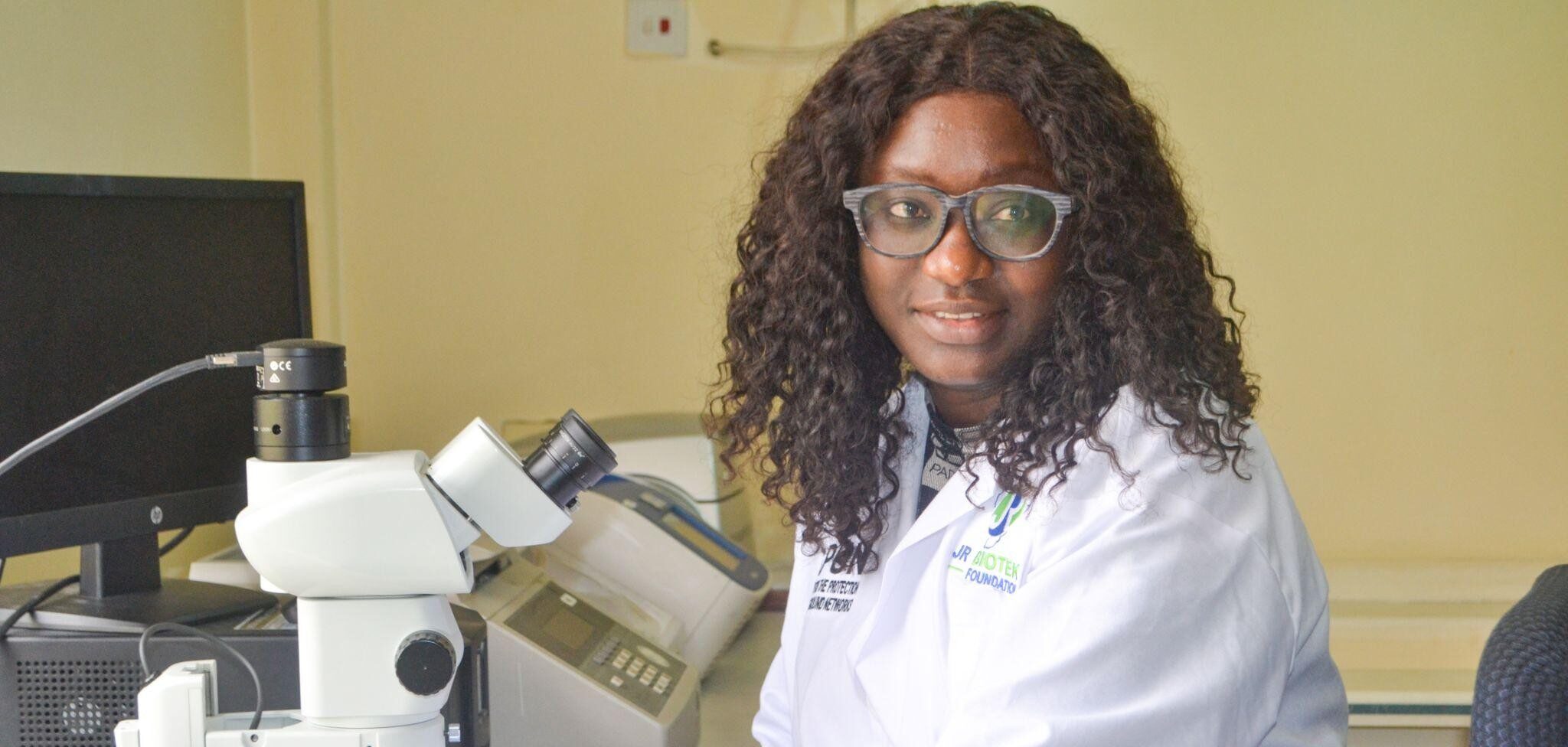
In 2021, Dr Utoblo was selected as one of 25 African crop scientists to participate in JR Biotek Foundation’s hands-on Plant Molecular Biology Laboratory Training Workshop, delivered in collaboration with the Centre for Dryland Agriculture (CDA) at Bayero University Kano, Nigeria. Supported by the Global Challenges Research Fund and the Department of Plant Sciences at the University of Cambridge, the intensive programme introduced participants to molecular biology techniques relevant to agricultural research.

The workshop combined practical laboratory training with lectures and scientific discussions involving researchers from Cambridge and elsewhere, helping participants strengthen the technical and research skills needed to investigate agricultural challenges relevant to their own contexts.

Image: Dr Obaiya Utoblo participating in JR Biotek Foundation’s 2021 Plant Molecular Biology Laboratory Training Workshop at the Centre for Dryland Agriculture, Bayero University Kano, Nigeria.

Taking Research Ideas Beyond the Laboratory

Following the workshop, Dr Utoblo participated in JR Biotek Foundation’s Food Security Symposium and 4th Africa Bio-Innovation Pitch Challenge, which brought together participants from the Foundation’s 2021 programmes in Nigeria, Ghana and Kenya.

Working collaboratively, participants developed research and innovation ideas addressing challenges including hunger, malnutrition and poverty, with connections to the UN Sustainable Development Goals on poverty, hunger and quality education.

For Dr Utoblo, the experience provided an opportunity to develop ideas beyond the laboratory, work with researchers from other African institutions and consider how scientific research could contribute to practical agricultural solutions.

Bringing Indigenous Crop Research into the Conversation

Her involvement with the JR Biotek network continued in October 2022, when she received a JR Biotek Foundation Travel Award to participate in the JR Biotek Alumni Symposium, co-hosted with the CSIR-Crops Research Institute in Kumasi, Ghana.

Themed Advancing Research on Indigenous Crops to Sustainably Meet Pressing Food and Nutrition Security Needs in Africa, the symposium brought together alumni from 15 research institutions across six African countries.

Dr Utoblo presented her research on sweet potato breeding and genetic improvement in Nigeria, contributing to wider discussions about the role of indigenous and locally important crops in strengthening African food and nutrition security.

The symposium also created opportunities for researchers to engage with smallholder farmers, reinforcing the importance of connecting scientific research with farmer experience and the agricultural challenges facing communities.

Image: Dr Obaiya Utoblo at the 2022 JR Biotek Foundation Alumni Symposium, hosted at the CSIR-Crops Research Institute in Ghana. She participated as a recipient of a JR Biotek Foundation Research Travel Award.

Expanding into Soil Microbiome Science

Two years later, Dr Utoblo returned to another JR Biotek Foundation scientific programme, this time expanding her experience beyond plant breeding. In 2024, she was selected to participate in the Africa Mycorrhizal Mapping & Metagenomics Workshop, co-developed by JR Biotek Foundation and the Society for the Protection of Underground Networks (SPUN), and delivered in partnership with CSIR-Crops Research Institute in Ghana and Oxford Nanopore Technologies.

The programme provided training in genetics, genomics and bioinformatics approaches for studying mycorrhizal fungal communities and their roles within soils and agricultural ecosystems.

For a scientist whose core work centres on crop improvement, this provided exposure to another important dimension of resilient agriculture: the biological systems beneath the crops themselves.

Image: Participants, facilitators and organisers of the Africa Mycorrhizal Mapping & Metagenomics Workshop, co-developed by JR Biotek Foundation and SPUN and delivered in partnership with the CSIR-Crops Research Institute, Ghana.

Continuing the Journey at the University of Jos

Today, Dr Obaiya Grace Utoblo continues her work as a plant breeder, researcher and lecturer at the University of Jos, applying genomic approaches to sweet potato genetic improvement and contributing to research relevant to food and nutrition security in sub-Saharan Africa.

Her research group has also secured a Nigerian Tertiary Education Trust Fund (TETFund) grant to support its research at the University of Jos.

Seen together, the different stages of her journey tell a larger story. A scientist participates in practical molecular biology training. She enters a wider African research network. She presents her work alongside peers and farmers. She gains exposure to new scientific areas and technologies. She takes those experiences back into her research and teaching. 

That is the kind of progression JR Biotek Foundation hopes to enable through sustained scientific capacity building.

The Multiplier Effect

Dr Utoblo’s story is not simply about participation in a series of programmes. It reflects the value of creating opportunities for scientists to keep learning, connecting and applying what they gain within their own institutions.

As a researcher and lecturer, the knowledge and networks she develops have the potential to travel further, into her research, her students, future collaborations and the agricultural challenges her work seeks to address.

Her journey is part of a growing story across the JR Biotek Foundation alumni network: African scientists building their own careers while strengthening the research and educational ecosystems around them.