Roots of Resilience: Celebrating a Decade of Science, Partnership and African-Led Innovation
By JR Biotek Foundation, 3 April 2025
Cambridge, 27 March 2025 — At the University of Cambridge, JR Biotek Foundation marked its tenth anniversary with Roots of Resilience: A Decade of Innovation & Impact, a day-long gathering of scientists, policy experts, business practitioners, artists, alumni and partners from Africa and around the world.
The event provided an opportunity to reflect on the relationships, scientific programmes and partnerships that shaped JR Biotek Foundation’s first decade, while looking towards a new phase of work connecting scientific capacity more deliberately with farmers, indigenous crops, innovation and agricultural systems.
It also marked the formal introduction of AGRIIP – the Agri-Innovation & Impact Platform, JR Biotek Foundation’s long-term initiative to bring African scientists, farmers, entrepreneurs and institutions together around locally identified food-system challenges.
A Decade in the Making: Science in Service of Humanity
Chaired by Dr Lyn Kouadio of the University of Oxford, the opening session reflected both on what had been built over the Foundation’s first decade and on the work still ahead.
Welcoming remarks from Professor Julian Hibberd, Head of the Department of Plant Sciences at the University of Cambridge, and an opening address by Professor John Carr, Head of the Virology & Molecular Plant Pathology Research Group, acknowledged the longstanding relationship between JR Biotek Foundation and Cambridge’s Department of Plant Sciences.
Over the years, researchers within the Department have contributed scientific expertise, laboratory support and collaboration to several of the Foundation’s scientific capacity-building programmes involving African researchers.
The opening keynote came from Dr Carol Ibe, Founder and Executive Director of JR Biotek Foundation and a Gates Cambridge alumna, who returned to the personal experiences that helped shape the organisation.
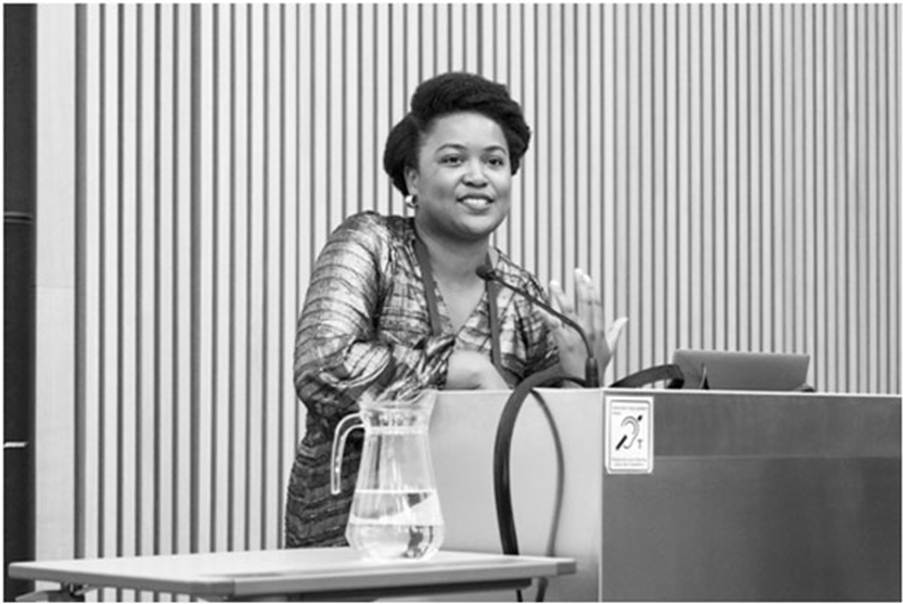
Photo: Dr Lyn Kouadio chairing the opening session.
The Soil Beneath Our Feet: A Founder’s Story
“Growing up in Nigeria,” Dr Ibe recalled, “we visited the village during festive seasons, where love and laughter filled the air. But every morning, my grandparents would leave at sunrise for the farm, returning only at sunset, often without food.”
She spoke about watching her grandfather continue farming until illness overtook him and her grandmother carry on with quiet resilience.
“To them, the soil was not just dirt. It was life, heritage, survival.”
Those experiences would eventually become part of the motivation behind JR Biotek Foundation and its commitment to strengthening African scientific capacity and connecting science more closely with the agricultural challenges affecting communities.
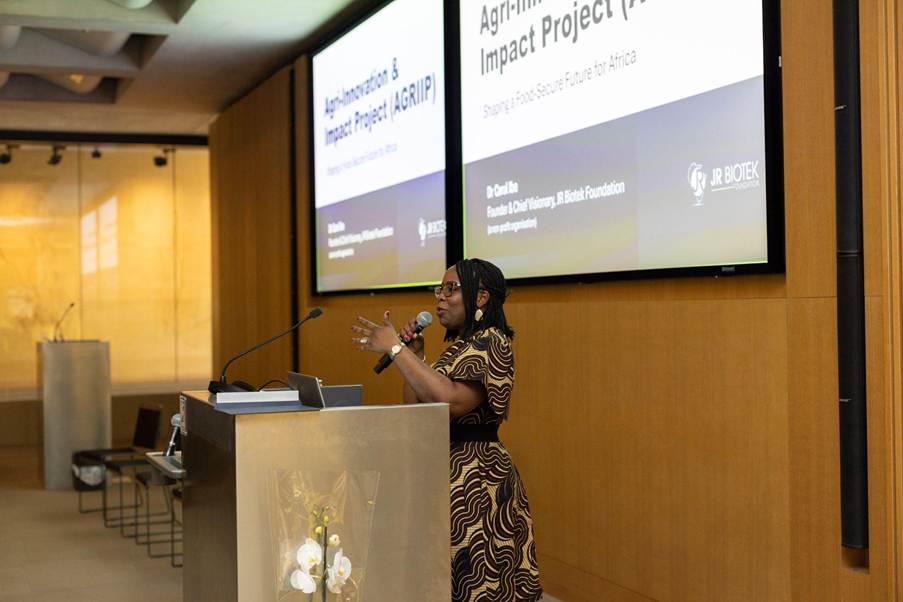
Photo: Dr Carol Ibe presenting AGRIIP’s 10-year vision.
By its tenth anniversary, what had begun as a small scientific capacity-building effort had developed into an international network of African scientists, institutions, mentors, collaborators and volunteers. The anniversary therefore provided an opportunity not simply to look back, but to ask what the Foundation’s accumulated scientific capacity and relationships could make possible next. That question sits at the heart of AGRIIP.
Over the coming decade, AGRIIP aims to empower 10,000 African scientists, support 10 million farmers, elevate at least 30 indigenous crops and catalyse 1,000 sustainable ventures. Its approach brings scientific training and mentorship together with farmer co-creation, indigenous crop research and entrepreneurship to help move locally relevant ideas towards practical impact.
Art also formed part of this wider vision. Through the JR Biotek Art Gallery, African artists use creative work to explore climate change, agriculture, cultural heritage and resilience while helping generate support for the Foundation’s work.
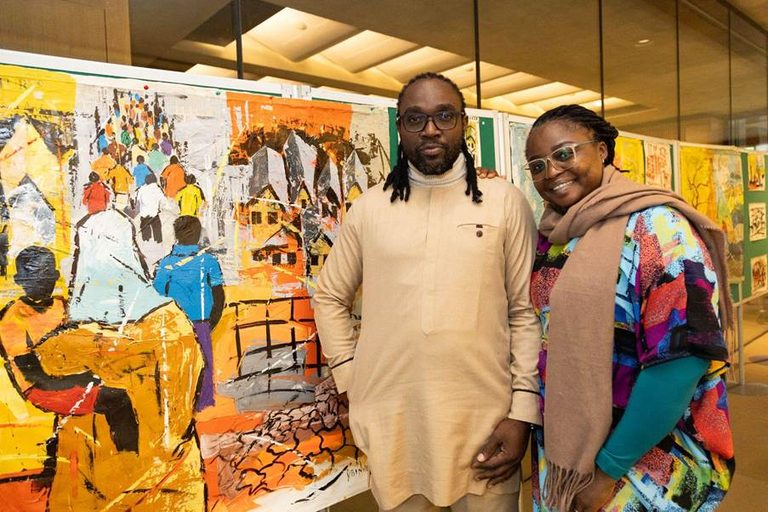
Photo: Nigerian artist Obi Nwaegbe (left) standing beside his artwork, exploring climate change and its effects on African farms and farming communities ahead of the Roots of Resilience exhibition at the University of Cambridge.
Keynotes that Challenged and Inspired
Professor Mark Tester of King Abdullah University of Science & Technology (KAUST) challenged participants to reconsider how scientific success is measured and to pay greater attention to whether research ultimately reaches the people and systems it is intended to serve.
“Too many discoveries remain trapped in journals. Real impact happens when we bridge the gap between lab and land.”
Drawing on his work in areas including salinity tolerance and crop genetics, Professor Tester explored how advanced plant science can contribute to more resilient agricultural systems.
Professor Mizeck Chagunda, then at The Roslin Institute, University of Edinburgh, broadened the discussion to livestock systems, highlighting the social, economic and ecological roles animals play across African communities. His presentation explored how genomics, digital technologies and community breeding approaches could contribute to productivity and climate resilience.
“The future isn’t about more animals. It’s about smarter systems, and smarter animals.”
Bridging Science and Society: A Vision for African Agriculture
A keynote panel moderated by Professor Shailaja Fennell brought together Professors Mark Tester, Mizeck Chagunda and Marie-Claire Cordonier Segger, alongside Maureen Abel.
Their discussion moved across science, policy and agricultural innovation, considering areas including gene editing, agroecology, advisory services and the importance of African leadership in shaping agricultural research and investment priorities.
A recurring theme was that scientific innovation cannot operate in isolation. Research, policy, finance, institutions and communities all influence whether new knowledge ultimately translates into meaningful change.
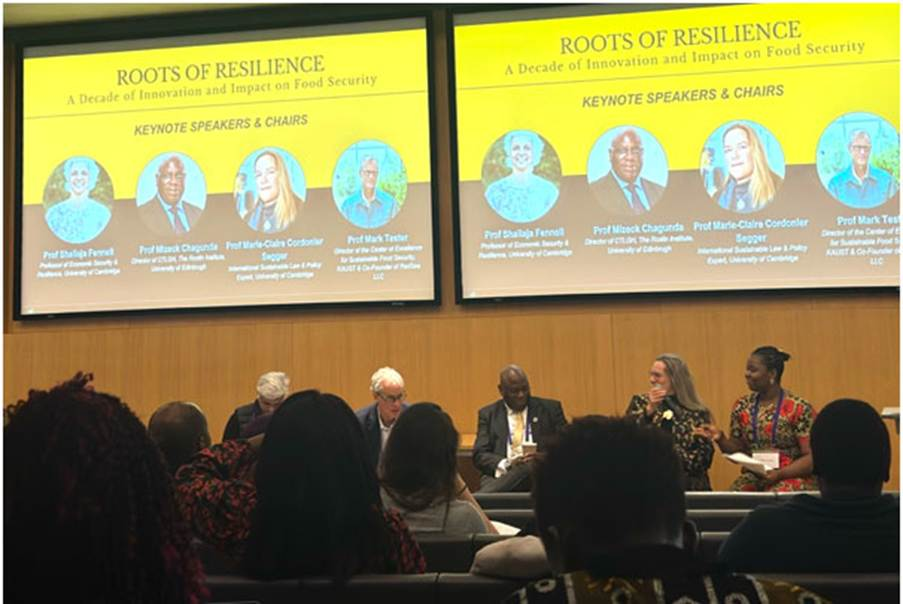
Photo: Keynote speakers Professor Mark Tester and Professor Mizeck Chagunda with session chairs Professor Shailaja Fennell and Professor Marie-Claire Cordonier Segger, supported by Maureen Abel, during the panel discussion and audience Q&A.
From Soil to Satellites: Climate-Smart Food Systems
Chaired by Professor Chagunda, a second expert panel examined climate-resilient food systems from several perspectives.
Ruth Jepkemoi of Kang4Nature, Kenya, highlighted traditional knowledge and community-led climate action, including the role of women farmers.
Professor Mario Caccamo of NIAB discussed bioinformatics, genetic diversity and the potential for African research systems to take advantage of rapidly developing technologies including genomics and artificial intelligence.
Dr Bethan Manley of SPUN focused attention beneath the soil, exploring the role of microbiomes and mycorrhizal fungi and the importance of locally appropriate approaches to soil health.
Dr Chloé Orland of Action Against Hunger considered integrated ecological approaches, while Dr Joanna Scales of Innovate UK discussed public-private partnerships supporting agricultural innovation across countries including Ghana, Nigeria and Brazil.
Dr Gabriel Onagoruwa of Olaniwun Ajayi LLP brought a financing perspective, examining the investment gap facing African agriculture and mechanisms including blended finance and green bonds.
Together, the discussion demonstrated why climate-resilient agriculture requires more than any single technology or discipline.
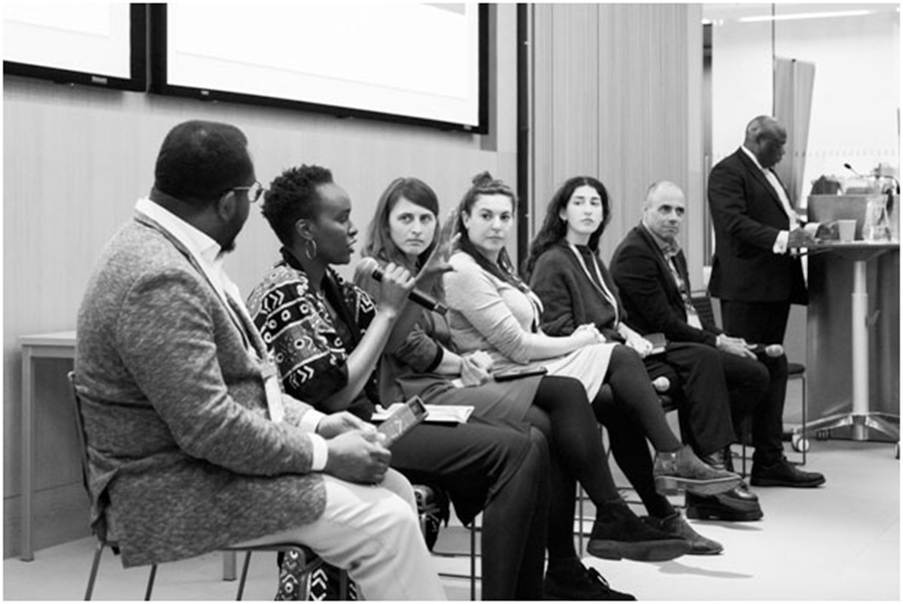
Photo: Professor Mizeck Chagunda chairing the climate-smart food systems panel with Dr Gabriel Onagoruwa, Ruth Jepkemoi, Dr Joanna Scales, Dr Chloé Orland, Dr Bethan Manley and Professor Mario Caccamo.
The Power of Art: Resistance, Remembrance and Renewal
Science was deliberately placed alongside another way of understanding environmental change: art.
Nigerian artist Obi Nwaegbe presented an exhibition of mixed-media works created partly from recycled materials. His work explored environmental degradation, displacement, agricultural heritage and resilience.
“Art is not decoration. It is protest, memory, and possibility. Through it, we confront injustice and imagine new futures.”
The exhibition formed part of the launch of the JR Biotek Art Gallery, an initiative connecting African creative expression with conversations around climate change, agriculture and food systems.
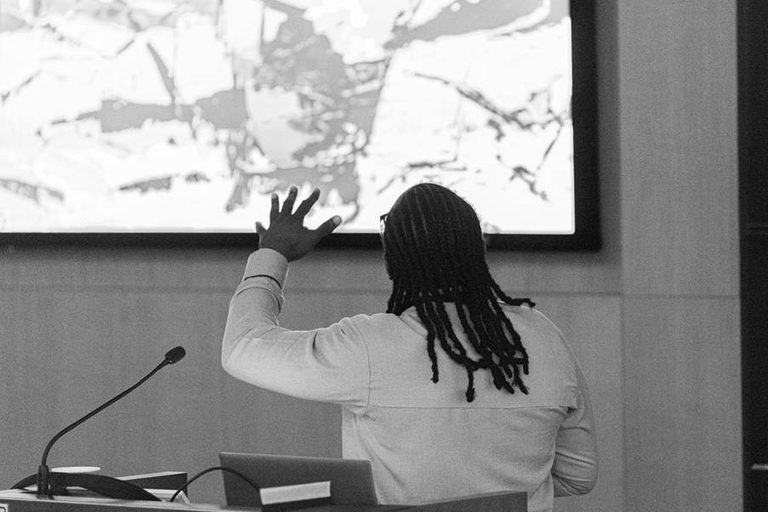
Photo: Obi Nwaegbe presenting his work during the Roots of Resilience exhibition, alongside Nkechinyere.
Alumni at the Helm: The JR Biotek Ripple Effect
A decade of capacity building is ultimately reflected in what people go on to do.
In a session chaired by Dr Francis Wamonje of NIAB, JR Biotek Foundation alumni reflected on their journeys since participating in the Foundation’s programmes and on the ways training, mentorship and relationships had influenced their research and leadership.
The discussion included experiences ranging from Dr Bolaji Thanni’s environmental work to Dr Jacob Ulzen’s research in soil science, alongside contributions from Dr Olaide Ogunsanya, Dr Velma Okaron and Dr Anthony Mabele.
“JR Biotek isn’t just a workshop. It’s a family. It gave us the tools and the belief to lead.” — Dr Velma Okaron
Their stories illustrated what JR Biotek Foundation increasingly describes as its multiplier effect: scientists who receive opportunities and subsequently teach, mentor, collaborate, build programmes and create opportunities for others.
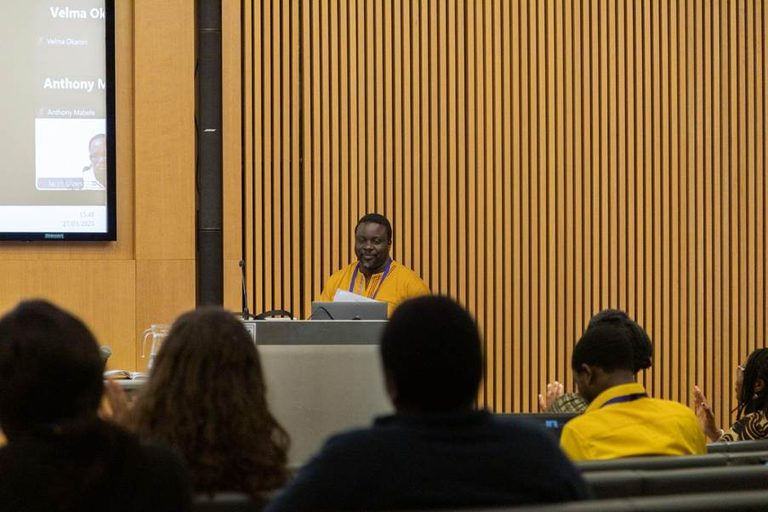
Photo: Dr Francis Wamonje chairing the hybrid JR Biotek Foundation alumni discussion with Dr Bolaji Thanni, Dr Olaide Ogunsanya, Dr Jacob Ulzen, Dr Velma Okaron and Dr Anthony Mabele, who joined online.
Launching AGRIIP: From Capacity Building to Systems Change
The introduction of AGRIIP – the Agri-Innovation & Impact Platform marked the transition from reflecting on JR Biotek Foundation’s first decade to considering its next.
AGRIIP builds on more than a decade of investment in African scientists but extends the model further, bringing scientists into closer collaboration with farmers, entrepreneurs and institutions to identify agricultural challenges, strengthen research around indigenous crops and develop science-backed innovations with pathways towards practical application.
“We’ve achieved so much with so little. Imagine what’s possible with the support this work truly deserves.” — Dr Carol Ibe
African institutional partners from Ghana and Nigeria joined the Cambridge gathering, reflecting relationships developed through years of collaborative scientific training and capacity building.
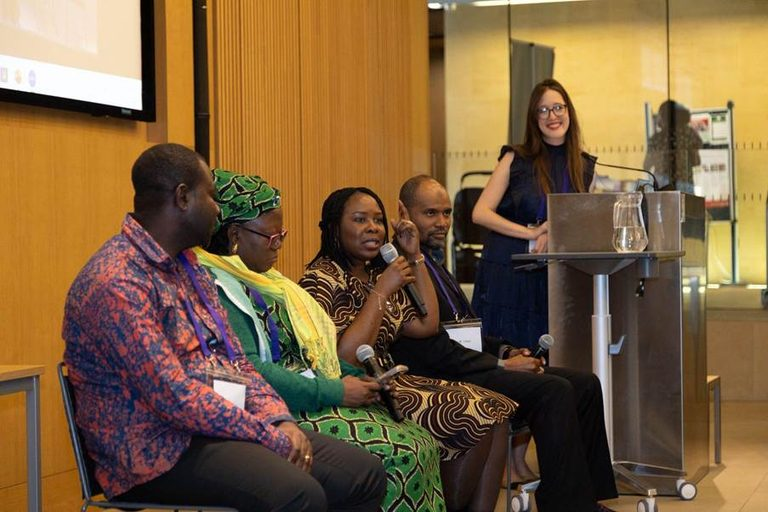
Photo: JR Biotek Foundation and AGRIIP partners from African research institutions. From left: Dr Albert Arhin, Kwame Nkrumah University of Science & Technology, Ghana; Dr Ruth Naa Ashiokai Prempeh, CSIR-Crops Research Institute, Ghana; Dr Carol Ibe, JR Biotek Foundation; Dr Kabir Mustapha Umar, Centre for Dryland Agriculture, Bayero University Kano, Nigeria; and session chair Dr Rebekah Sacher.
Closing Reflections: Towards a Shared Future
The day concluded with A Shared Vision in Agricultural Innovation, a reflective discussion in which African scientists and partners considered how scientific training and equitable partnerships can strengthen research capacity, diagnostics and regional collaboration.
When a Cambridge student asked how members of the African diaspora could contribute, Dr Ibe responded:
“Africa’s transformation must come from within, but it will rise faster when the diaspora stands beside it.”
The programme then turned to the people and institutions whose contributions had helped make JR Biotek Foundation’s first decade possible.
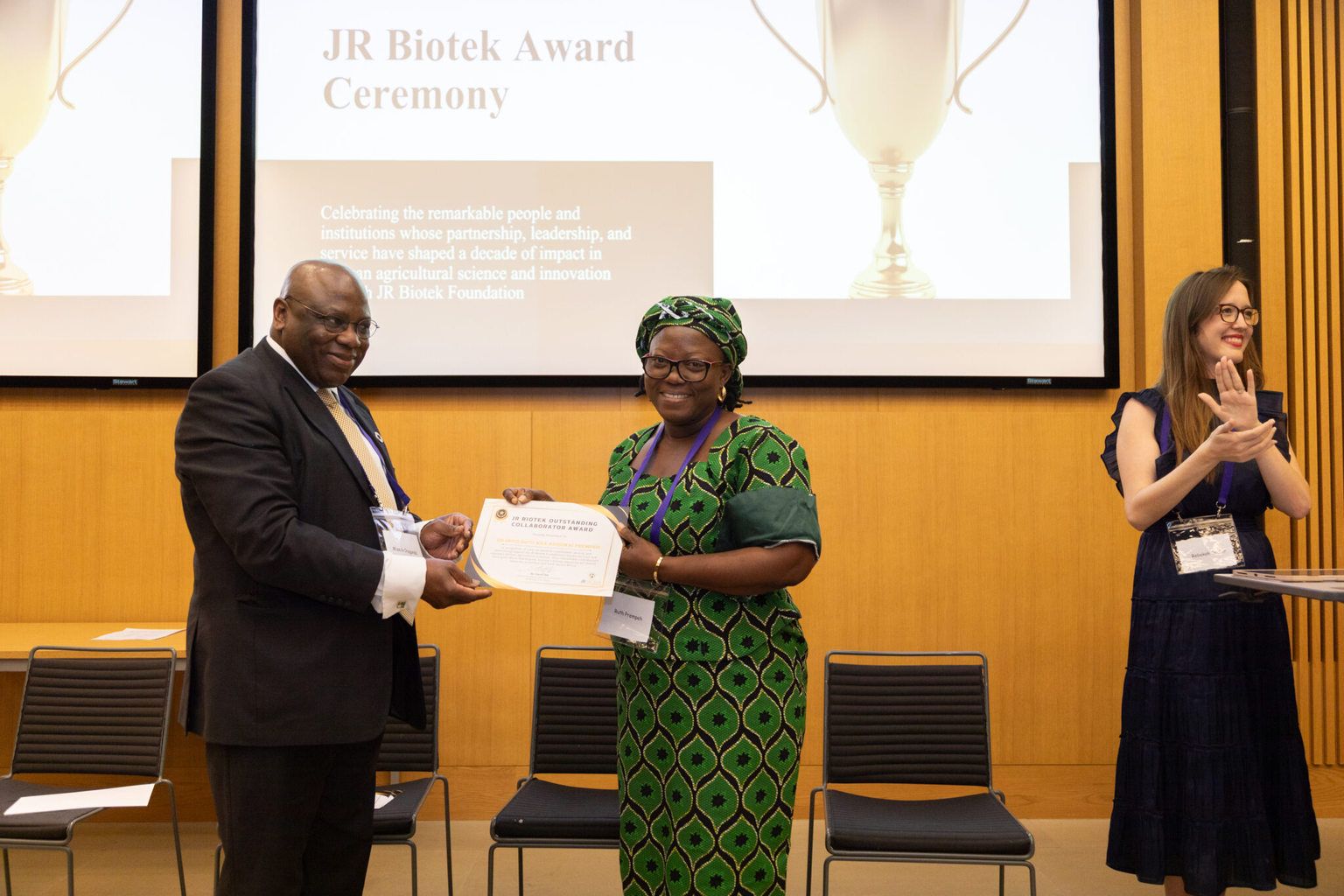
The inaugural JR Biotek Foundation Awards recognised partnership, leadership, mentorship, service and sustained contribution to African scientific capacity building.
Institutional honours included the Excellence in Partnership Award for the CSIR-Crops Research Institute, Ghana, and the Centre for Dryland Agriculture, Bayero University Kano, Nigeria, as well as an Institutional Gratitude Award recognising the Department of Plant Sciences at the University of Cambridge.
Professor John P. Carr received the Lifetime Contribution Award in recognition of his longstanding scientific, technical and practical support for JR Biotek Foundation, including his contribution to collaborative projects and fundraising efforts.
Individual honours also recognised Dr Ruth Naa Ashiokai Prempeh, Dr Anthony Mabele and Dr Kabir Mustapha Umar for their contributions as collaborators; Dr Velma Okaron for her role in helping initiate and develop the JR Biotek–Plant Cell Atlas mentorship programme; Dr Jacob Ulzen and Dr Olaide Ogunsanya for exceptional service and leadership; and Ruth Nanjala, Founder of My Science Journey and a mentee of the Carol & Noor African Bioscience Mentorship Programme, for her emerging contribution to science mentorship.
The awards captured an important part of the Foundation’s story: its programmes have always depended on people willing to share expertise, build relationships, mentor others, open doors and contribute time to work larger than themselves.
A Movement, Not a Moment
What emerged across Roots of Resilience was a principle that continues to shape JR Biotek Foundation’s work: lasting agricultural transformation requires connections across disciplines, institutions and communities, with the people most affected by agricultural challenges participating in shaping the solutions.
As Dr Rebekah Sacher, who chaired the closing session, reflected:
“Today, we witnessed what it truly means to build equitable partnerships. The vision is clear, the people are ready, and the future is now.”
Since that gathering in Cambridge, AGRIIP has begun moving from vision towards implementation, with work in Nigeria including scientific training, farmer engagement and wider stakeholder dialogue helping to establish the foundations for the Platform’s next phase.
The tenth anniversary therefore represented both a reflection on JR Biotek Foundation’s first decade and the beginning of a larger question for the years ahead: how can the scientific capacity, partnerships and people built over the first decade be connected to create lasting change across African food systems?
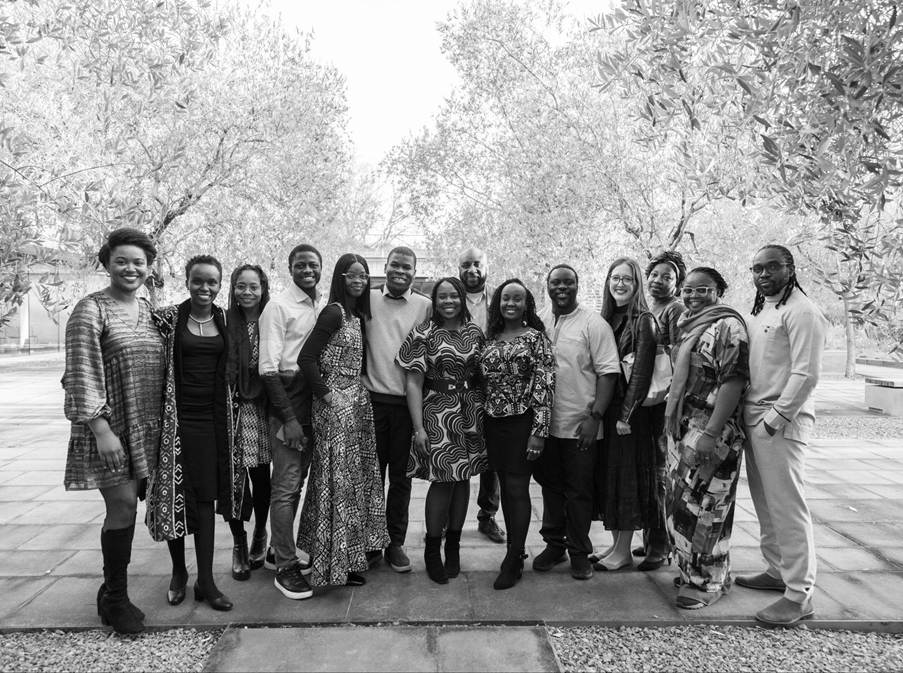
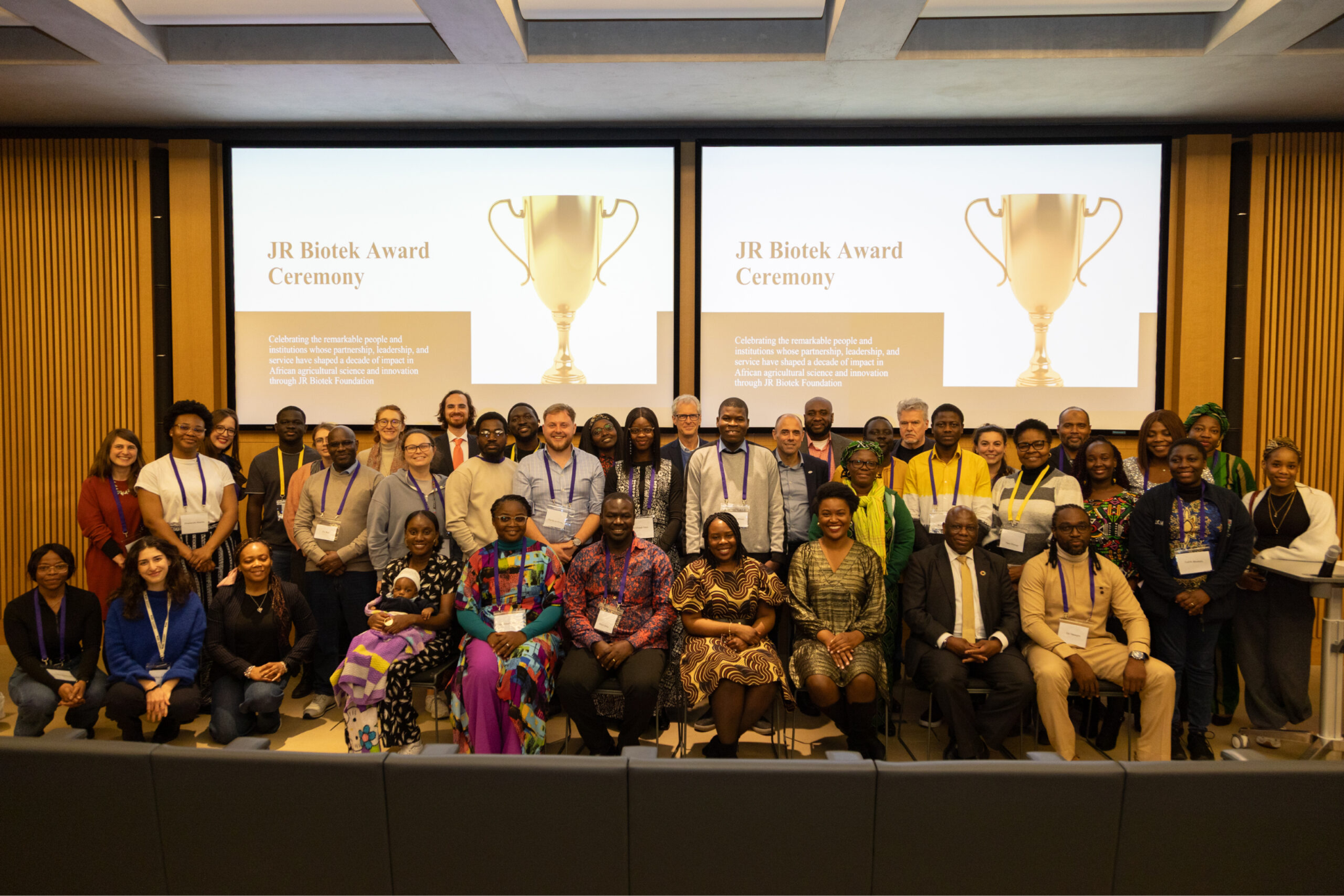
Photo: Some participants of JR Biotek Foundation’s tenth-anniversary gathering at the University of Cambridge.