Listening First: How Farmer Voices Are Shaping the Future of Indigenous Crop Research in Nigeria
By JR Biotek Foundation
September 2026
What happens when agricultural research begins not with a laboratory question, but with a conversation with a farmer?
Across Abia and Kano States in Nigeria, JR Biotek Foundation–AGRIIP has been listening directly to farmers about the realities shaping how they grow food: changing weather patterns, declining productivity, crop choices, pests and diseases, access to inputs, indigenous knowledge, and the practical decisions they make every farming season.
But these conversations are intended to do more than document farmers’ challenges. They are helping us determine what questions scientists should investigate, which crops require greater attention, where innovation is needed, and how research can respond more directly to the priorities of farming communities.
This is central to AGRIIP – the Agri-Innovation & Impact Platform. If agricultural research and innovation are intended to improve farmers’ lives, farmers should have a meaningful role in shaping the problems being addressed.
We listen first. Then we build from what we learn.
Starting with farmers in Abia State
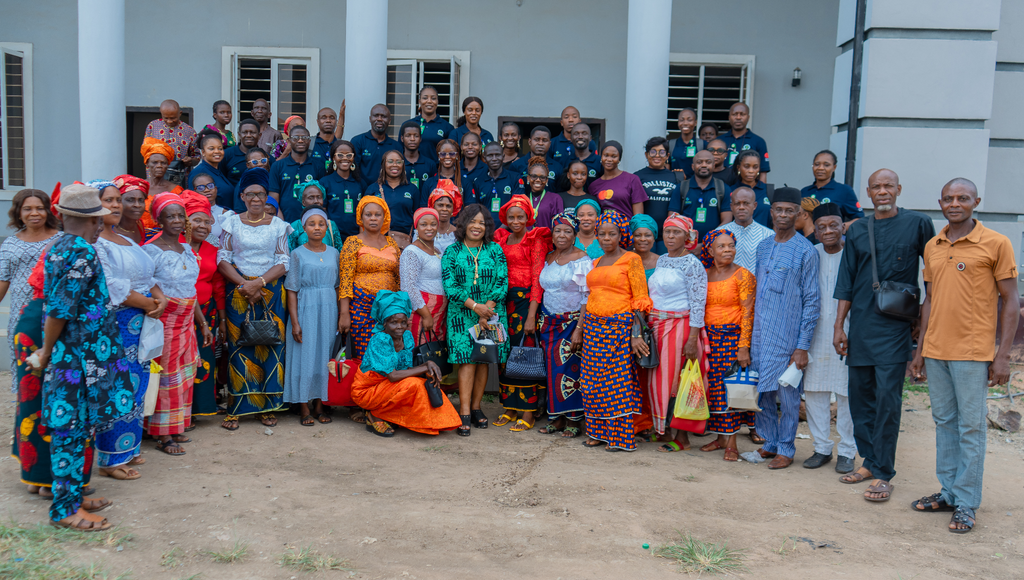
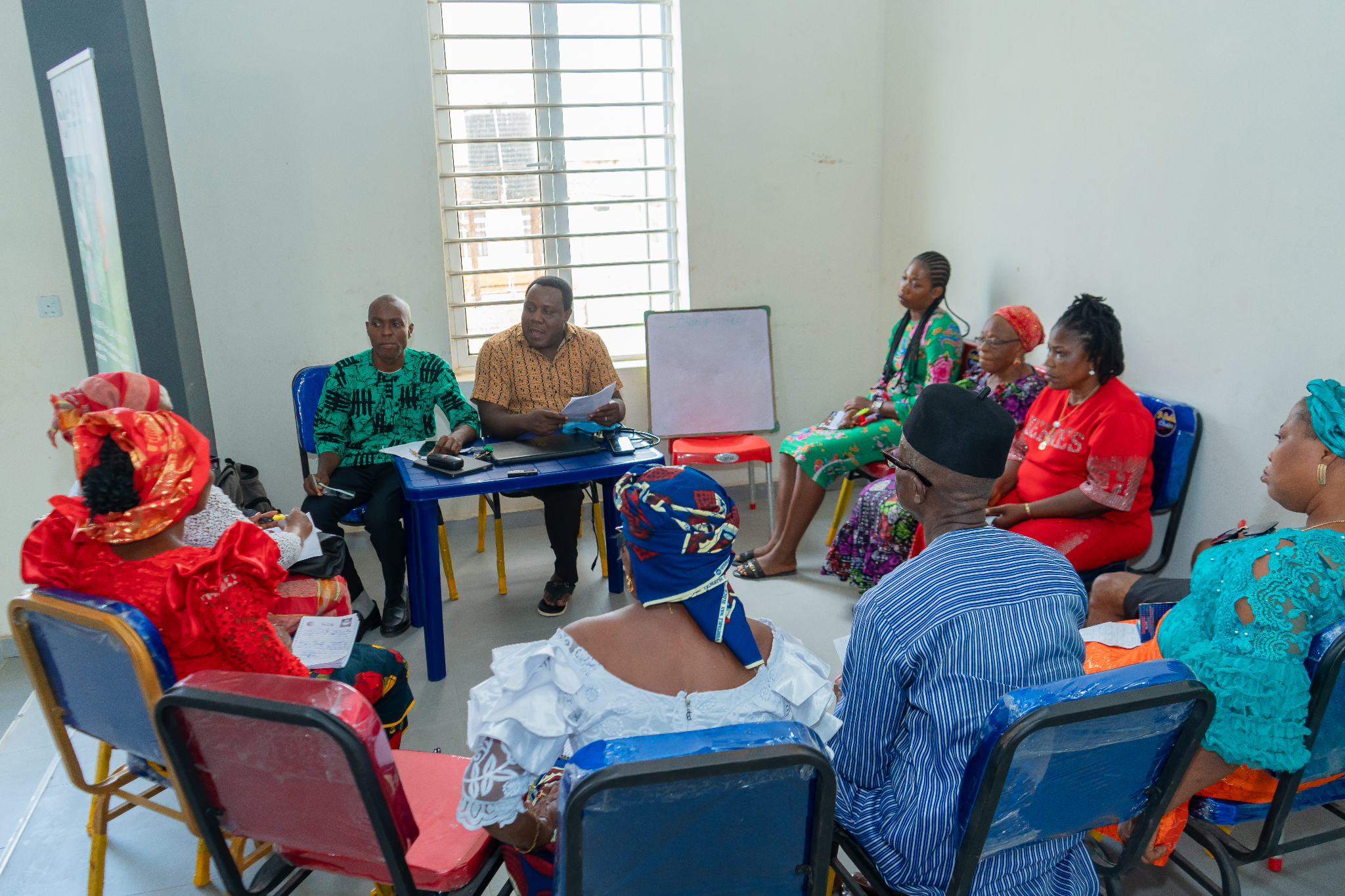
Caption: JR Biotek-AGRIIP farmer engagement delivered in collaboration with MOUAU (Abia State, Nigeria).
On 25 March 2026, JR Biotek Foundation–AGRIIP worked with Michael Okpara University of Agriculture, Umudike (MOUAU) to bring scientists and 50 farmers from rural communities in Abia State together for Farmer–Scientist Engagement and Focus Group Discussions.
The purpose was not simply to teach farmers about climate change. We wanted to listen.
Farmers discussed what they were observing in their fields and communities, including changes affecting soil, crop varieties, pests and diseases, rainfall patterns and farming-season cycles, and the ways they were already responding and adapting.
The conversations explored farmers’ awareness of climate change while creating space for them to identify their own questions, challenges, practices, needs and knowledge gaps. This distinction matters.
Farmers are not simply end-users waiting for researchers to develop technologies for them. They hold generations of knowledge about their crops, soils, seasons and environments. They are also among the first people to observe when those systems begin to change.
Bringing farmers and scientists into the same conversation therefore gives research something invaluable: a clearer understanding of the problems as they are actually experienced on the ground.
In Kano, listening at a much larger scale
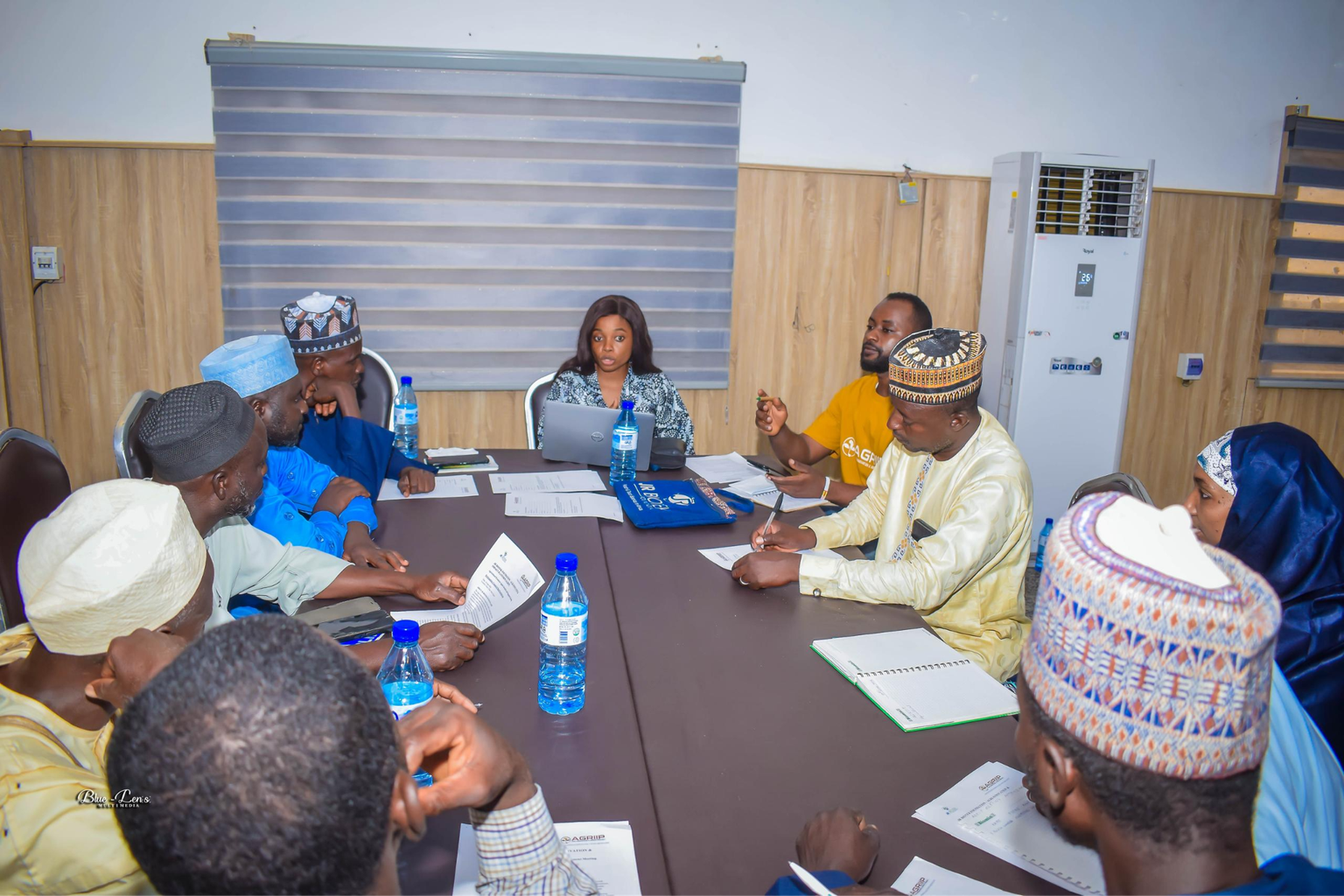
Caption: JR Biotek Foundation-AGRIIP Nigeria team meeting with Agricultural Extension experts in Kano State, Nigeria in June 2026
Several months later, this approach expanded in northern Nigeria.
In Kano State, JR Biotek Foundation–AGRIIP engaged more than 630 smallholder farmers across six Local Government Areas, enabling the team to explore agricultural challenges across a much larger farming population.
Farmers spoke about pressures affecting their livelihoods, including climate variability, pests and diseases, rising input costs and poor yields.
But we also asked questions that receive less attention: What crops are farmers still growing? Which have they reduced or stopped cultivating? Which would they like to grow again? And what is preventing them from doing so?
The answers begin to tell an important story. Farmers reported growing crops including Bambara groundnut, millet and sesame. Bambara groundnut also emerged among the crops farmers expressed interest in returning to or expanding, while farmers reported reductions in the cultivation of crops including maize, rice and wheat.
These are more than interesting observations. They are potential starting points for research and innovation.
Turning farmer challenges into research questions
Imagine a farmer telling us: “This crop no longer produces the way it used to.” That single observation could contain several research questions.
For a plant breeder, it might raise questions about varieties, genetics and adaptation. For a plant pathologist, it could point towards emerging pests or diseases. For a soil scientist, it might indicate declining soil fertility. For a climate scientist, it could reveal the effects of changing rainfall or temperature patterns. For an entrepreneur, the problem may lie elsewhere, in access to quality seed, processing, storage, inputs or markets. And sometimes part of the answer may already exist within farmers’ own knowledge and practices.
This is why AGRIIP brings together farmers, scientists, entrepreneurs and institutions rather than treating them as separate parts of the agricultural system.
The challenge identified on a farm can become a research question. The research question can generate evidence. The evidence can inform an innovation. And that innovation can return to farmers for testing, feedback and improvement.
Re-centering undervalued indigenous crops
These conversations are also helping AGRIIP understand what is happening to indigenous and locally important crops within changing African food systems. Bambara groundnut is particularly interesting. Its appearance in the Kano engagement not only among crops being cultivated, but also among those farmers expressed an interest in returning to or expanding, raises important questions.
- What constrains its production?
- Are farmers satisfied with available varieties?
- What affects its yield?
- What are the processing challenges?
- Is there sufficient market demand?
- Could breeding, agronomy, processing or new food products make the crop more attractive and profitable to grow?
These are precisely the kinds of questions that can connect farmer knowledge with scientific research and entrepreneurship.
Many indigenous crops remain deeply embedded in African food cultures and farming systems, yet receive considerably less research, breeding, investment, processing innovation and market development than major commodity crops.
AGRIIP does not want to decide from outside which crops communities should value. We want to ask farmers themselves:
What do you grow? What have you stopped growing? Why? What would you like to grow again? What makes a crop valuable to your household and community? What would make it more productive and profitable to grow?
Then we can ask where science and innovation can genuinely help.
More than data collection
This is why the engagements in Abia and Kano are not intended to end as surveys, reports or outreach activities. They are part of building a different relationship between research and the people it is intended to serve.
Farmer insights can inform research priorities. Scientists can investigate the underlying biological, agronomic and environmental problems. Entrepreneurs can explore processing, products, technologies and markets. Universities and research institutes can contribute expertise and scientific infrastructure. And farmers can remain involved as ideas move towards testing and application.
The process becomes:
Listen → Identify → Research → Co-create → Test → Learn → Improve
That is the model we are building.
From farmer voices to the AGRIIP Fellowship
What we are learning in Abia and Kano will also help inform the AGRIIP Research & Entrepreneurship Fellowship.
Rather than asking African scientists and entrepreneurs to develop solutions around problems defined elsewhere, the Fellowship is being designed to connect them with locally identified agricultural and food-system challenges.
- A question raised by a farmer could become the starting point for a research project.
- A production constraint could inspire work on an improved crop variety or agronomic practice.
- A processing challenge could become a new technology.
- An undervalued crop could inspire a new food product.
- A market constraint could become the basis of an agricultural enterprise.
And scientists and entrepreneurs can work alongside farmers and partner institutions to determine whether those ideas actually work in the environments for which they are intended. This is how farmer engagement moves from listening to action.
Building agricultural innovation from the ground up
Africa’s agricultural challenges are complex, and science has an essential role to play in addressing them. But scientific excellence alone is not enough. Solutions must make sense in the places where they will be used. That requires understanding farmers’ realities. Respecting indigenous knowledge. Recognising economic constraints. Understanding why farmers make particular crop choices, and ensuring that researchers remain connected to the people whose challenges their work seeks to address.
The farmers we have engaged in Abia and Kano States are helping us do exactly that. Their experiences are giving scientists better questions to investigate. Their crop choices are helping us understand what communities value. Their challenges are showing us where innovation is needed, and their knowledge is helping us think differently about how agricultural research should be designed.
Because meaningful agricultural transformation cannot simply be delivered to farmers. It has to be built with them.
That is why, at AGRIIP, we are listening first, and building from the ground up.