Beyond the Prize: How JR Biotek Is Helping African Scientists Turn Ideas into Impact

From environmental action and interdisciplinary innovation to an enterprise reaching nearly 2,500 farmers, JR Biotek alumni show what can happen when scientific training is connected with collaboration, entrepreneurship and opportunities to test ideas.

By JR Biotek Foundation | Alumni Stories

Across Africa, many promising scientific ideas never make it beyond the laboratory. Researchers may identify an important problem, develop an innovative approach or see an opportunity to improve agriculture, food systems or environmental sustainability, but translating that idea into something practical often requires more than scientific expertise. It requires collaboration, confidence, mentorship, early-stage support, entrepreneurial thinking and opportunities to test ideas in the real world.

For JR Biotek Foundation, this has been an important part of scientific capacity building from the beginning.

Alongside hands-on laboratory training, mentorship and research development, JR Biotek has deliberately created opportunities for African scientists to think beyond conventional academic pathways and explore how their knowledge might become a venture, a community initiative, a new research direction or a practical solution.

The journeys of Dr Bolaji Thanni, Beakal Tadesse Girma, the Soilless Veggy team and the founders of Seed Services show what that can look like.

Dr Bolaji Thanni: Turning environmental concern into action

In 2017, Dr Bolaji Thanni joined JR Biotek Foundation’s inaugural hands-on plant molecular biology training programme at the Department of Plant Sciences, University of Cambridge.

The programme brought together 17 African scientists for intensive practical training, alongside the inaugural Africa Diaspora Biotech Summit, which convened more than 100 delegates for conversations around biotechnology, agriculture, innovation and Africa’s development.

But participants were also challenged to think beyond the laboratory.

As part of the JR Biotek Africa Bio-Innovation Pitch Challenge, scientists were invited to develop and present ideas that could respond to challenges affecting agriculture, the environment and communities across Africa.

Dr Thanni presented the Advocate for Clean Climate & Environment Initiative, an idea centred on environmental sustainability, climate action and community engagement in Nigeria. Her initiative won the Grand Prize.

The significance of the experience was not simply the recognition. It gave an emerging scientist a platform to articulate how scientific knowledge could be connected with environmental advocacy and practical action.

Dr Thanni has continued to build a scientific career in plant–fungal interactions while maintaining a strong interest in environmental sustainability and the wider application of science to agricultural and community challenges.

Her journey reflected an idea that would increasingly shape JR Biotek’s programmes: scientists should not only be equipped to generate knowledge, but also encouraged to imagine what that knowledge can do.
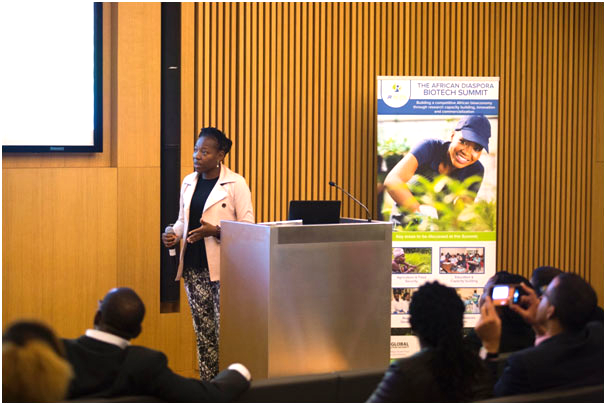
Photo: Dr Bolaji Thanni presenting her initiative to a panel of judges during the JR Biotek Foundation Africa Diaspora Biotech Summit at the University of Cambridge, 2017.

Beakal Tadesse Girma: Developing an Innovation Mindset

For Beakal Tadesse Girma, the journey began with practical molecular biology training.

He recalls:

“JR Biotek provided me with invaluable hands-on training in the practical aspects of molecular biology. Through their programs, I gained experience in essential techniques such as DNA and RNA extraction, which became the foundation of my lab skills.”

During the COVID-19 period, Beakal continued participating in JR Biotek’s learning activities, including theoretical sessions that strengthened his understanding of research concepts and introduced him to advanced data analysis and visualisation tools.

He says those experiences had a lasting effect on his scientific development:

“These experiences significantly enhanced my ability to work independently and played a crucial role in helping me secure scholarships in my field. They also prepared me to thrive in larger, more advanced laboratories, where I now conduct my research with greater accuracy and efficiency.”

Today, Beakal is a PhD researcher at the University of Cape Town in South Africa and a scientist at the Ethiopian Institute of Agricultural Research.

His doctoral research focuses on identifying drought-tolerant tef genotypes and understanding the mechanisms behind their tolerance using morpho-physiological and molecular approaches. His work in Ethiopia also focuses on improving food crops through conventional breeding to enhance productivity and resilience.

But Beakal says JR Biotek’s influence extended beyond technical science.

“Beyond technical skills, JR Biotek facilitated networking opportunities with African researchers, allowing me to collaborate and exchange research insights. Their business incubation programs broadened my professional perspective, encouraging me to think beyond traditional research and explore innovative opportunities in agriculture.”

That shift mattered.

“The experience has fostered an innovative mindset, motivating me to be part of the solution in my field and to consider business opportunities alongside scientific research.”

His experience shows that scientific training can do more than strengthen laboratory competence. It can broaden how researchers understand their role, and help them see entrepreneurship and innovation as legitimate pathways for translating knowledge into impact.
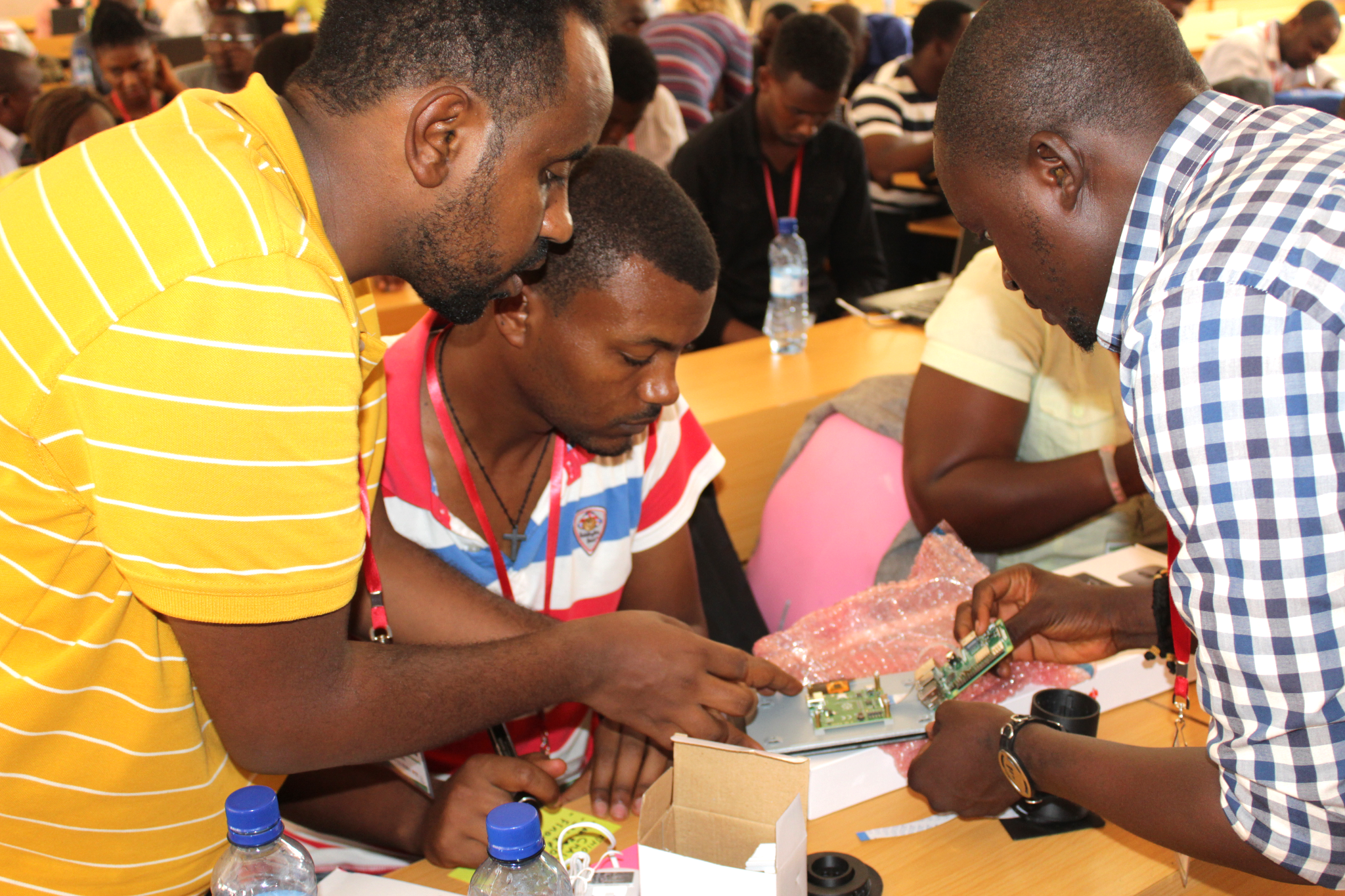
Photo: Beakal Tadesse Girma participating in JR Biotek Foundation’s 2019 hands-on Plant Molecular Biotechnology Laboratory Training and Open Labware Building Workshop at the University of Abomey-Calavi, Benin Republic.

Soilless Veggy: When scientists from different disciplines build together

Sometimes innovation begins simply by bringing the right people into the same room. That happened during JR Biotek Foundation’s 2021 hands-on plant molecular biology training programme at the CSIR–Crops Research Institute in Kumasi, Ghana.

Participants were not only receiving scientific training. They were also placed into multidisciplinary teams and challenged to develop practical responses to agricultural and food-system problems.

One of those teams brought together four scientists who had not previously worked together. Their challenge was significant: how could vegetable production become more accessible in environments where fertile land and agricultural inputs were limited? Their response became Soilless Veggy.
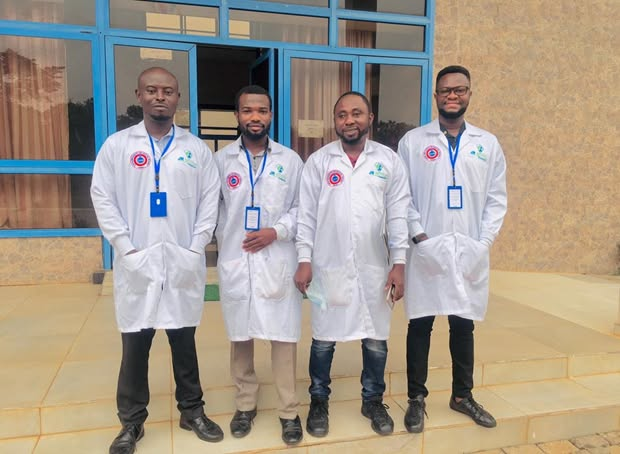
Photo: Members of the Soilless Veggy team following their win at the 2021 JR Biotek Foundation Africa Bio-Innovation Pitch Challenge.

The team developed the concept for a nutrient-rich, affordable growing medium made from locally available materials and requiring minimal soil. The idea was designed to support vegetable production in urban and resource-limited settings while reducing dependence on fertile land and external inputs.

The team included scientists working across plant breeding, biotechnology, crop science, sustainable agriculture and medical science, with connections spanning Nigeria, Ghana, Morocco and Japan.

Their idea went on to win JR Biotek Foundation’s 2021 tri-national Bio-Innovation Pitch Competition, held alongside training programmes in Ghana, Nigeria and Kenya.

With seed support from JR Biotek Foundation, the team began piloting the concept and generating early results. The value of the experience went beyond the competition itself. Four scientists with different expertise met through a training programme. They identified a shared problem. They combined their knowledge. And they created something none of them had arrived with individually. That is the kind of interdisciplinary collaboration that innovation often requires.

Seed Services: When a £1,500 Award Helped an Existing Venture Reach More Farmers

In 2018, EcoSeed, now Seed Services, participated in JR Biotek Foundation’s Africa Bio-Innovation initiative. The seed enterprise had already been established by its founders, who were working to expand access to indigenous vegetable and legume seed varieties in Benin Republic.

Through the Africa Bio-Innovation Pitch Challenge, the team presented its venture and plans for growth and received a £1,500 JR Biotek Foundation cash award.

The founders later reported that the award helped the company expand its operations and distribute high-yielding indigenous vegetable and legume seed varieties to nearly 2,500 farmers across southern and central Benin. They also reported subsequent expansion of production, acquisition of an additional 1.75 hectares of land, installation of irrigation and recruitment of two full-time technicians.

“The cash prize enabled our start-up seed company, Ecoseed, to expand its operations and distribute high-yielding indigenous vegetable and legume seed varieties to nearly 2,500 farmers across southern and central Benin.”

The story provides an important example from JR Biotek Foundation’s early Bio-Innovation work: a relatively modest financial award, provided at the right stage, can help an existing African-led venture take its work further.

The £1,500 award did not create the enterprise or account for everything it subsequently achieved. But based on the founders’ own reporting, it contributed to an expansion that ultimately reached thousands of farmers.
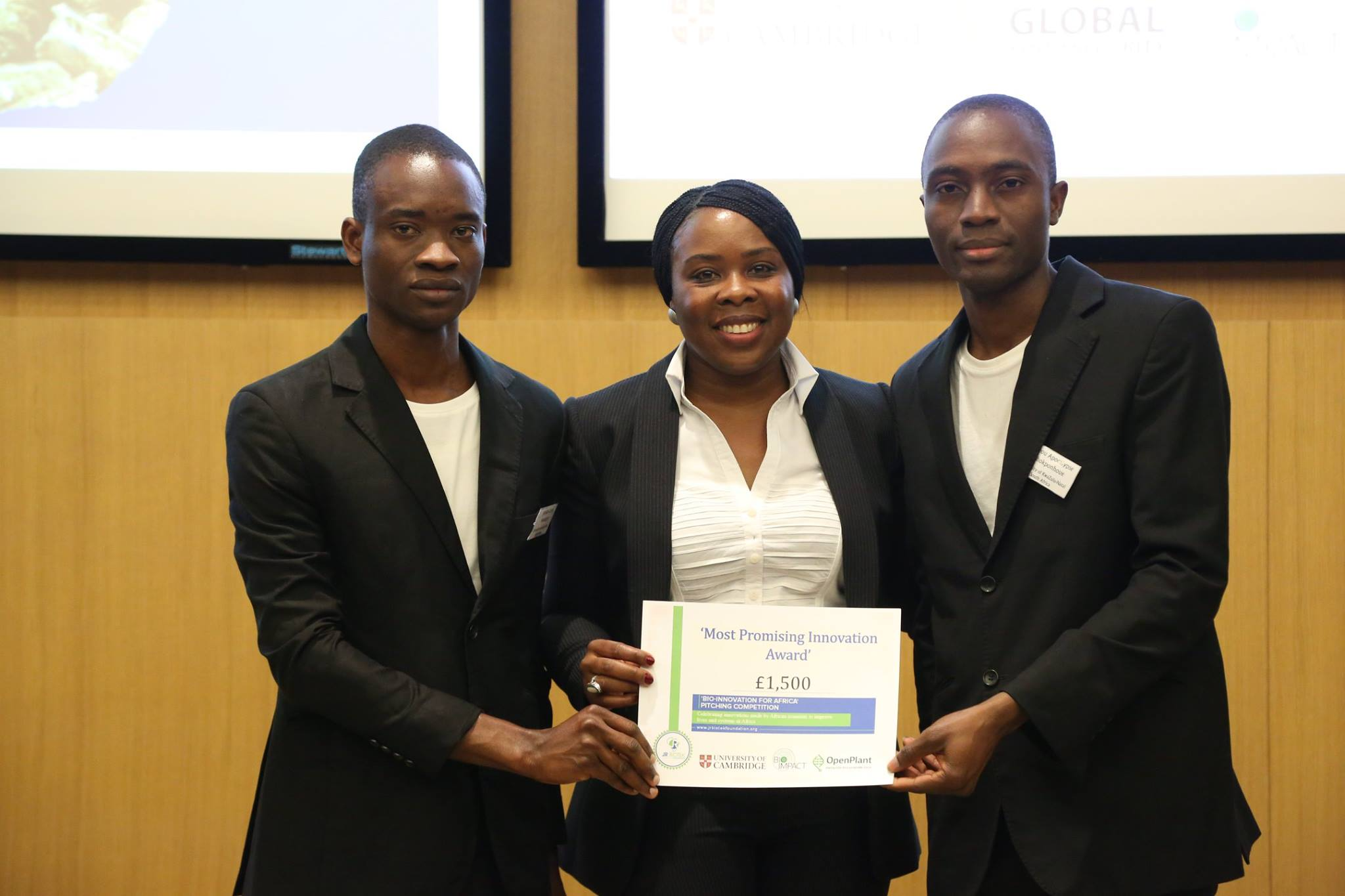
Photo: Seed Services co-founders receiving the £1,500 innovation award during JR Biotek Foundation’s UK–Africa Food Security Symposium and Plant Molecular Bio-Laboratory Training Workshop at the University of Cambridge, 2018.

More than a pitch competition

The Africa Bio-Innovation initiative was never intended to be only about pitching. It was introduced because scientific capacity building raised a bigger question:

What happens after scientists acquire new knowledge and technical skills?

  • Can they recognise problems worth solving?
  • Can they work across disciplines?
  • Can they communicate an idea clearly?
  • Can they understand who might use a solution?
  • Can they translate research into a product, service, enterprise, policy intervention or community initiative?
  • Can they build something that survives beyond a workshop?

By embedding innovation activities into scientific training programmes, JR Biotek sought to expose researchers to these questions early.

For some participants, that meant developing a venture. For others, it meant beginning to think differently about their research. And for others still, the greatest outcome may simply have been discovering collaborators with whom they could build something later.
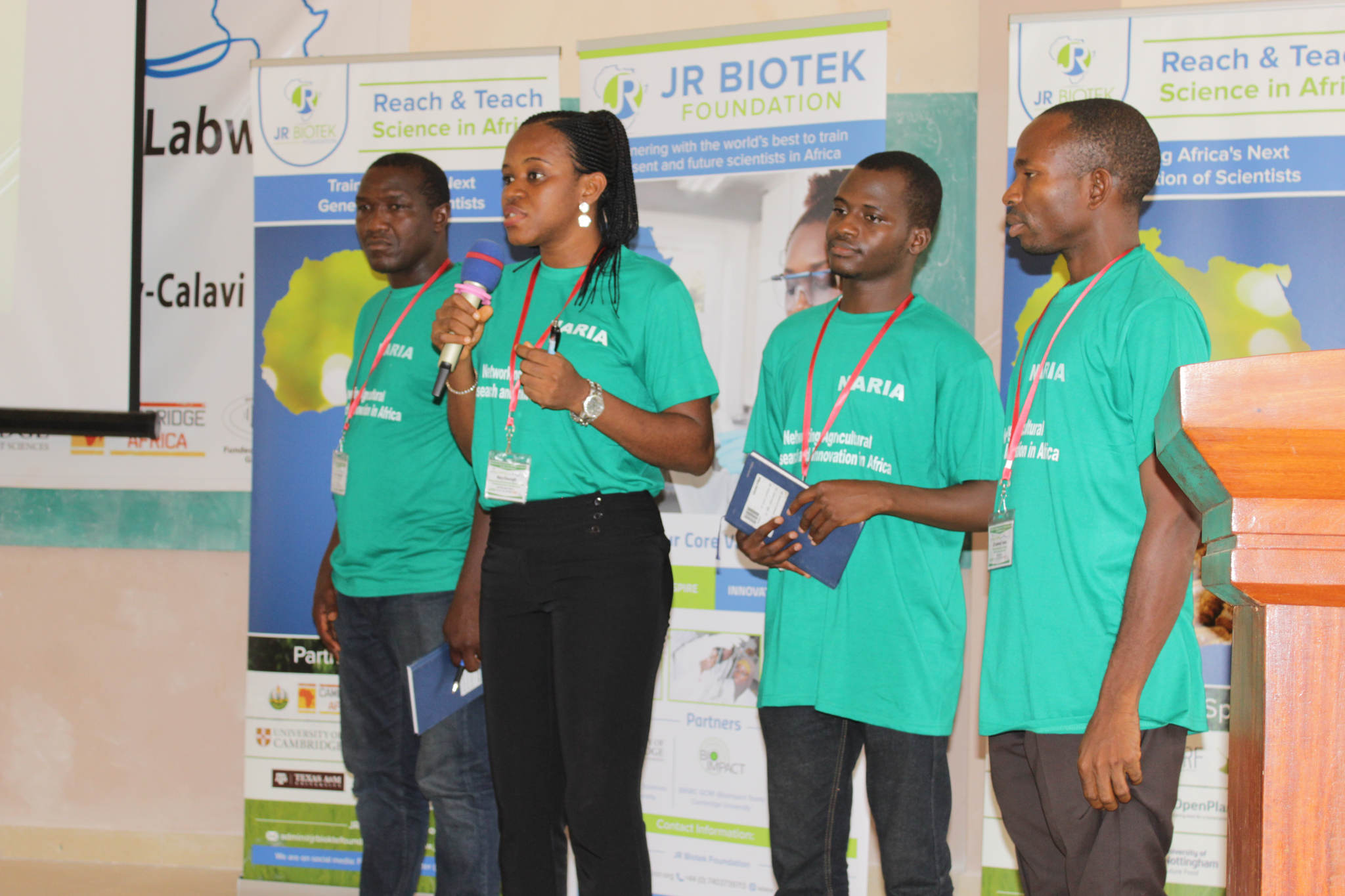
Photo: One of the winning teams presenting during JR Biotek Foundation’s 2019 Africa Bio-Innovation Pitch Challenge at the University of Abomey-Calavi, Benin Republic.

From Bio-Innovation to AGRIIP

These experiences also taught JR Biotek Foundation something important. A competition can start something. It cannot provide everything an idea needs to grow.

Scientific innovation requires technical expertise, but it can also require sustained mentorship, collaboration, early-stage finance, business knowledge, facilities, markets, field testing and institutional support. That learning has helped shape the next phase of JR Biotek Foundation’s work.

Through AGRIIP – the Agri-Innovation & Impact Platform, the Foundation is building stronger connections between scientific research, farmer priorities and entrepreneurship.

Rather than asking researchers to develop solutions in isolation, AGRIIP begins by listening to farmers and agricultural communities: What challenges are they facing? Which crops are becoming harder to grow? Where are yields declining? What limits processing, storage or market opportunities? Which undervalued indigenous crops have potential but remain under-researched or under-invested? Those realities can then help inform research and innovation priorities.

The AGRIIP Research & Entrepreneurship Fellowship is being developed around this principle, bringing researchers and entrepreneurs together around locally identified challenges and creating clearer pathways for promising ideas to be tested, developed and applied.

In this sense, AGRIIP is not a departure from JR Biotek Foundation’s earlier Bio-Innovation work. It is an evolution of what we have learned from it.
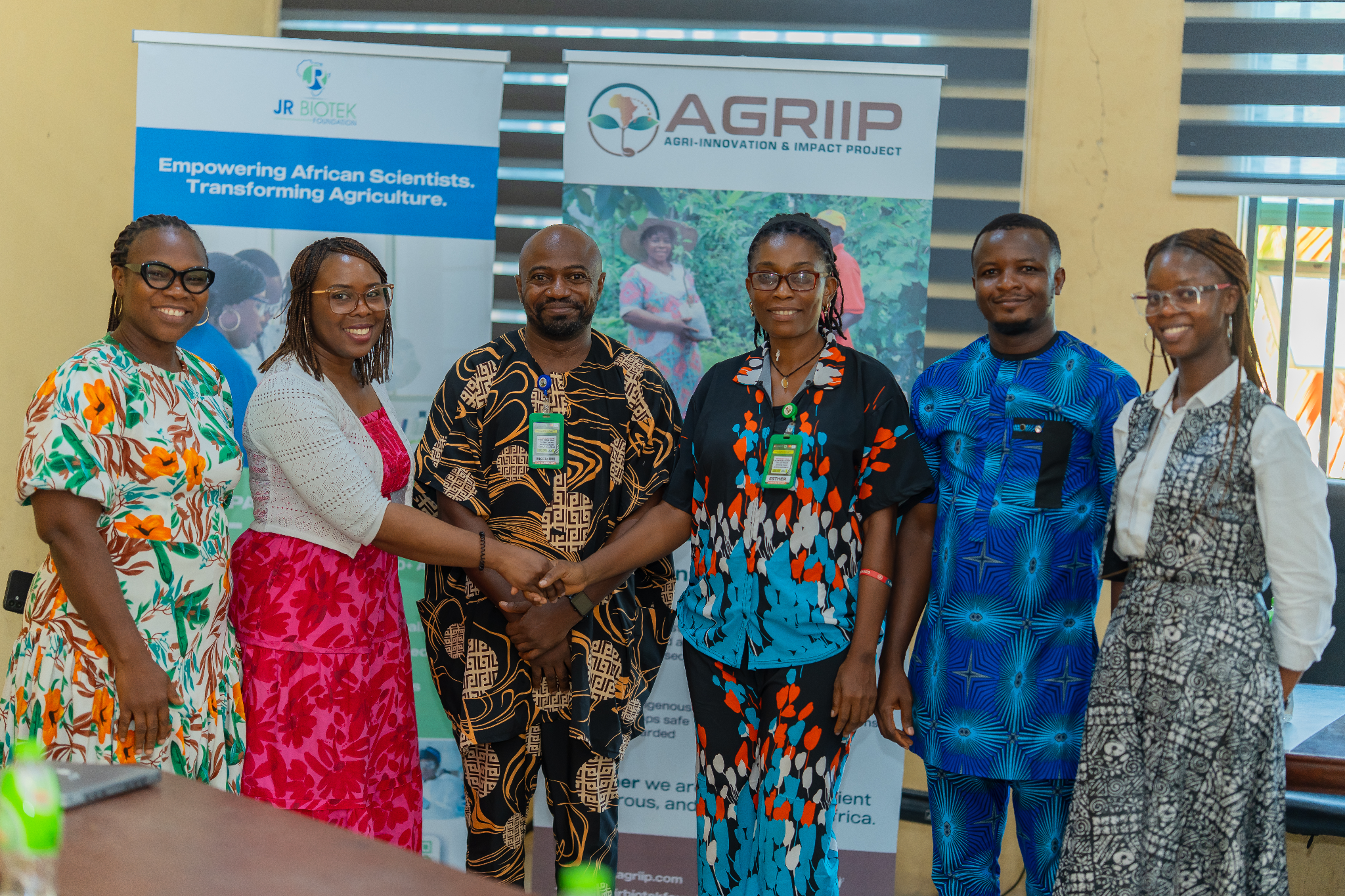
Photo: Participants in JR Biotek Foundation’s Research Innovation Challenge, delivered as part of the 2026 scientific laboratory capacity-building programme at Michael Okpara University of Agriculture, Umudike, Nigeria.

Building scientists who can also build solutions

The stories emerging from JR Biotek Foundation’s network show why scientific capacity building cannot end at technical training.

Africa needs researchers with strong laboratory skills and rigorous scientific thinking. It also needs scientists who can recognise opportunities, work with people outside their own disciplines, understand the realities of farmers and communities, and translate knowledge into solutions that can move beyond academic spaces.

Dr Thanni’s environmental initiative began with a scientist seeing a problem she wanted to address. Beakal’s experience helped broaden his perspective from molecular research towards innovation and entrepreneurship. Soilless Veggy emerged because scientists who had never worked together were given a reason to collaborate. Seed Services shows what can happen when an early-stage idea receives a small but timely opportunity, and the founders take it much further.

These are different forms of innovation, and that is precisely the point. There is no single route from science to impact. Sometimes it becomes a company, a community initiative, a research collaboration, a new way of approaching an old problem, and sometimes the first impact is simply helping a scientist realise that their knowledge can travel far beyond the laboratory.

That is the opportunity JR Biotek Foundation continues to create: not merely to train excellent African scientists, but to help build the connections, confidence and pathways through which their ideas can become solutions.
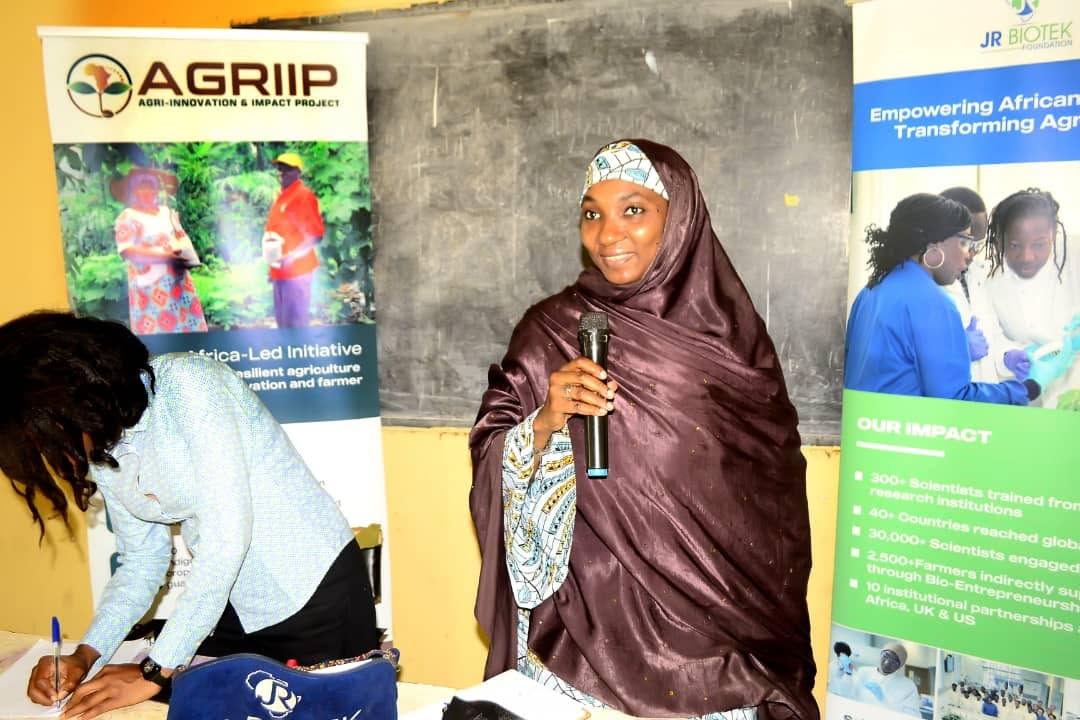
Photo: Dr Binta Sani Ibrahim, JR Biotek Foundation alumna (2017) and JR Biotek Foundation–AGRIIP Nigeria team member, engaging with farmers during the AGRIIP Farmer Sensitisation Workshop in Kano State, Nigeria, 2026.
 

News & Stories

Stay up to date with our latest scientific training programmes, farmer engagement activities, research and innovation, alumni achievements and partnerships and events.

April 3, 2025

Roots of Resilience: Celebrating a Decade of Science, Partnership and African-Led Innovation

Cambridge, 27 March 2025 — At the University of Cambridge, JR Biotek Foundation marked its tenth anniversary with Roots of Resilience: A Decade of Innovation & Impact, a day-long gathering of scientists, policy experts, business practitioners, artists, alumni and partners from Africa and around the world.
April 5, 2025

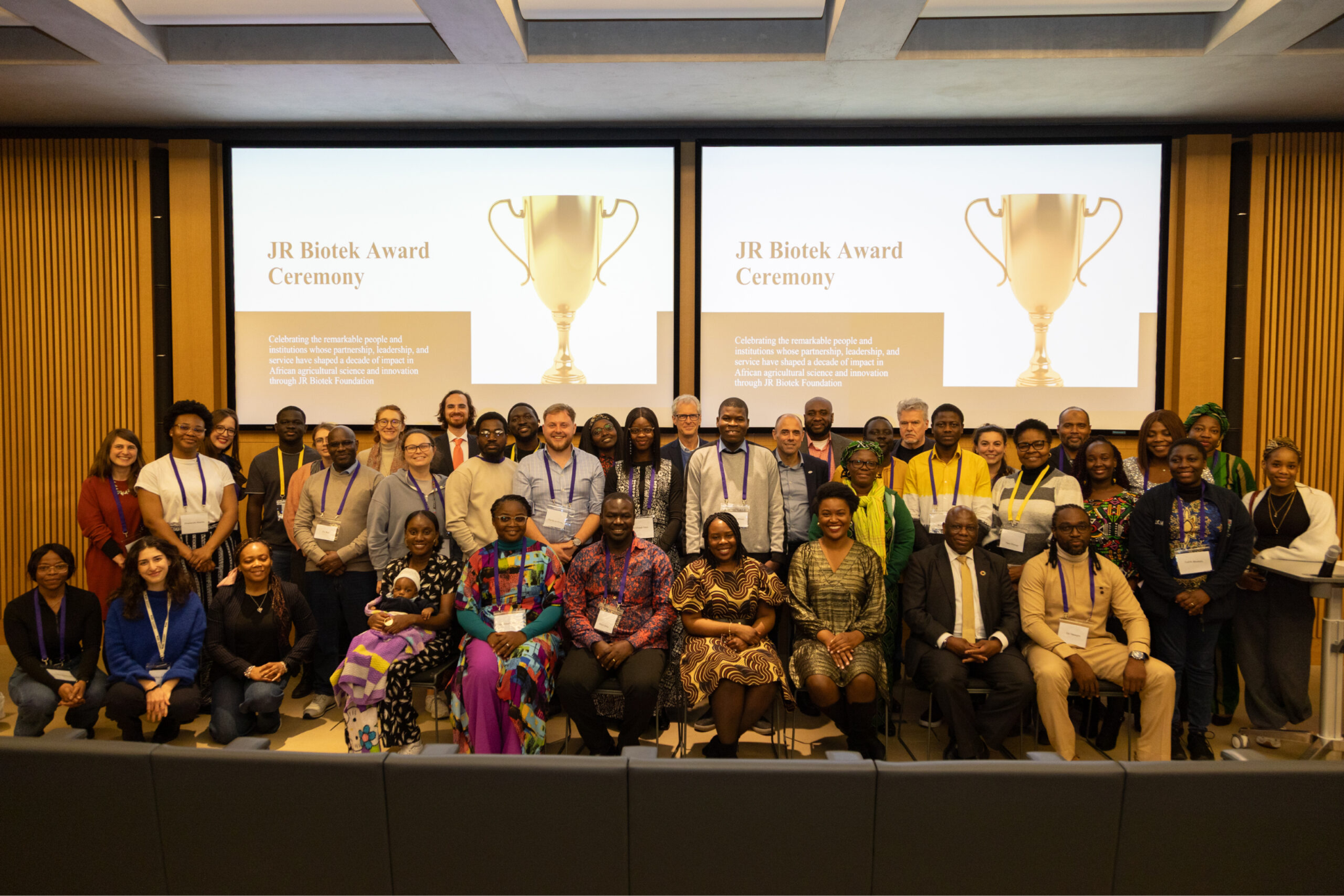
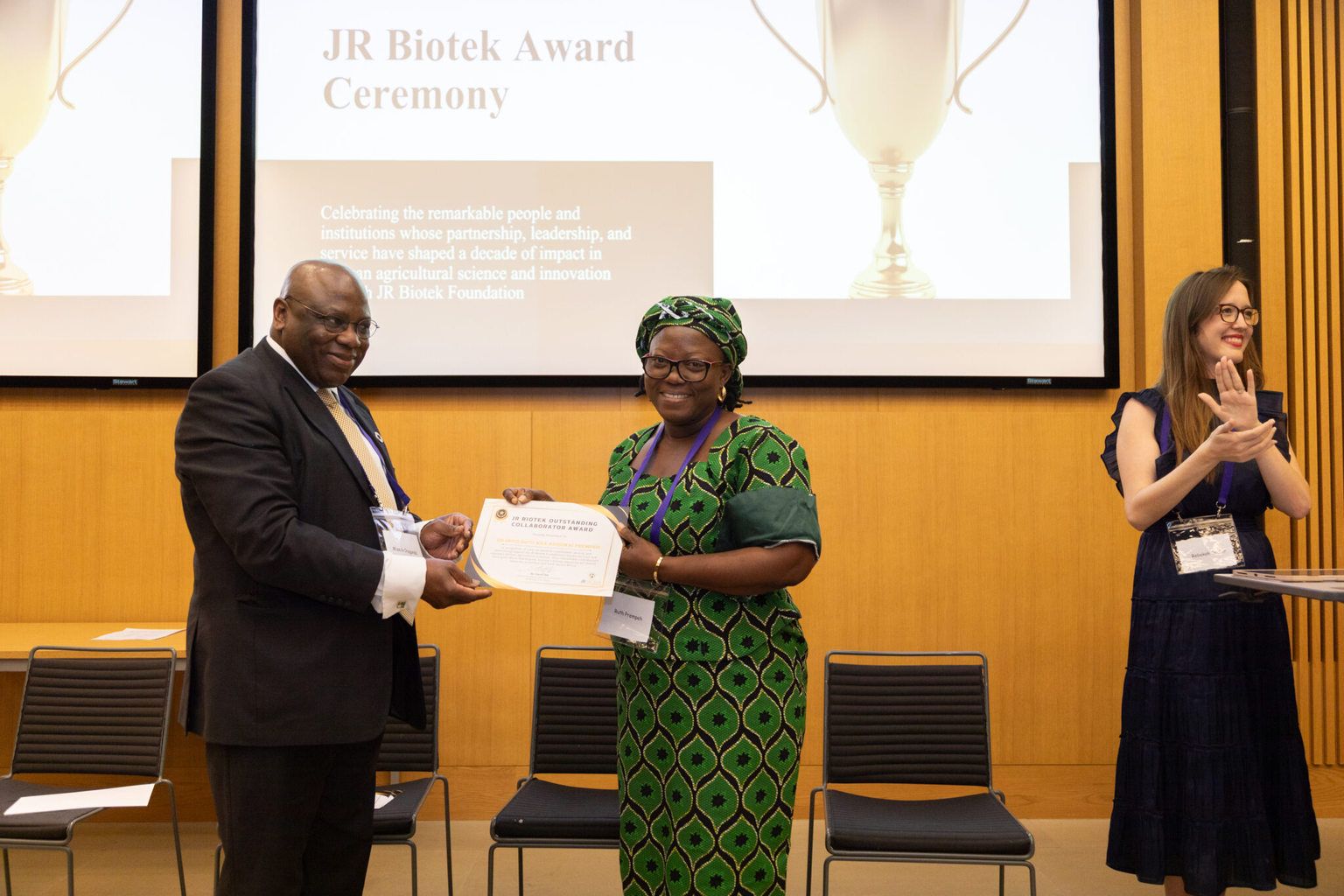
JR Biotek Awards Honour a Decade of Partnership, Service and Excellence in African Science

For ten years, JR Biotek Foundation’s work has been built not only through programmes, but through people, scientists who mentor others, institutions that open their laboratories and networks, volunteers who give their time, and partners who believe that strengthening African science can transform lives and food systems.
October 2, 2025

JR Biotek Foundation Launches AGRIIP: A 10-Year Mission to Reimagine Africa’s Food Future

JR Biotek Foundation has launched the Agri-Innovation & Impact Platform (AGRIIP), an ambitious 10-year initiative bringing together African scientists, farmers, entrepreneurs and institutions to develop science-backed solutions to some of the most pressing challenges facing African agriculture and food systems.
Scroll to Top

Subscribe to our newsletter

* indicates required
Consent & Privacy

Beyond the Prize: How JR Biotek Is Helping African Scientists Turn Ideas into Impact

By JR Biotek Foundation

From environmental action and interdisciplinary innovation to an enterprise reaching nearly 2,500 farmers, JR Biotek alumni show what can happen when scientific training is connected with collaboration, entrepreneurship and opportunities to test ideas.

Beyond the Prize: How JR Biotek Is Helping African Scientists Turn Ideas into Impact

From environmental action and interdisciplinary innovation to an enterprise reaching nearly 2,500 farmers, JR Biotek alumni show what can happen when scientific training is connected with collaboration, entrepreneurship and opportunities to test ideas.

By JR Biotek Foundation | Alumni Stories

Across Africa, many promising scientific ideas never make it beyond the laboratory. Researchers may identify an important problem, develop an innovative approach or see an opportunity to improve agriculture, food systems or environmental sustainability, but translating that idea into something practical often requires more than scientific expertise. It requires collaboration, confidence, mentorship, early-stage support, entrepreneurial thinking and opportunities to test ideas in the real world.

For JR Biotek Foundation, this has been an important part of scientific capacity building from the beginning.

Alongside hands-on laboratory training, mentorship and research development, JR Biotek has deliberately created opportunities for African scientists to think beyond conventional academic pathways and explore how their knowledge might become a venture, a community initiative, a new research direction or a practical solution.

The journeys of Dr Bolaji Thanni, Beakal Tadesse Girma, the Soilless Veggy team and the founders of Seed Services show what that can look like.

Dr Bolaji Thanni: Turning environmental concern into action

In 2017, Dr Bolaji Thanni joined JR Biotek Foundation’s inaugural hands-on plant molecular biology training programme at the Department of Plant Sciences, University of Cambridge.

The programme brought together 17 African scientists for intensive practical training, alongside the inaugural Africa Diaspora Biotech Summit, which convened more than 100 delegates for conversations around biotechnology, agriculture, innovation and Africa’s development.

But participants were also challenged to think beyond the laboratory.

As part of the JR Biotek Africa Bio-Innovation Pitch Challenge, scientists were invited to develop and present ideas that could respond to challenges affecting agriculture, the environment and communities across Africa.

Dr Thanni presented the Advocate for Clean Climate & Environment Initiative, an idea centred on environmental sustainability, climate action and community engagement in Nigeria. Her initiative won the Grand Prize.

The significance of the experience was not simply the recognition. It gave an emerging scientist a platform to articulate how scientific knowledge could be connected with environmental advocacy and practical action.

Dr Thanni has continued to build a scientific career in plant–fungal interactions while maintaining a strong interest in environmental sustainability and the wider application of science to agricultural and community challenges.

Her journey reflected an idea that would increasingly shape JR Biotek’s programmes: scientists should not only be equipped to generate knowledge, but also encouraged to imagine what that knowledge can do.

Photo: Dr Bolaji Thanni presenting her initiative to a panel of judges during the JR Biotek Foundation Africa Diaspora Biotech Summit at the University of Cambridge, 2017.

Beakal Tadesse Girma: Developing an Innovation Mindset

For Beakal Tadesse Girma, the journey began with practical molecular biology training.

He recalls:

“JR Biotek provided me with invaluable hands-on training in the practical aspects of molecular biology. Through their programs, I gained experience in essential techniques such as DNA and RNA extraction, which became the foundation of my lab skills.”

During the COVID-19 period, Beakal continued participating in JR Biotek’s learning activities, including theoretical sessions that strengthened his understanding of research concepts and introduced him to advanced data analysis and visualisation tools.

He says those experiences had a lasting effect on his scientific development:

“These experiences significantly enhanced my ability to work independently and played a crucial role in helping me secure scholarships in my field. They also prepared me to thrive in larger, more advanced laboratories, where I now conduct my research with greater accuracy and efficiency.”

Today, Beakal is a PhD researcher at the University of Cape Town in South Africa and a scientist at the Ethiopian Institute of Agricultural Research.

His doctoral research focuses on identifying drought-tolerant tef genotypes and understanding the mechanisms behind their tolerance using morpho-physiological and molecular approaches. His work in Ethiopia also focuses on improving food crops through conventional breeding to enhance productivity and resilience.

But Beakal says JR Biotek’s influence extended beyond technical science.

“Beyond technical skills, JR Biotek facilitated networking opportunities with African researchers, allowing me to collaborate and exchange research insights. Their business incubation programs broadened my professional perspective, encouraging me to think beyond traditional research and explore innovative opportunities in agriculture.”

That shift mattered.

“The experience has fostered an innovative mindset, motivating me to be part of the solution in my field and to consider business opportunities alongside scientific research.”

His experience shows that scientific training can do more than strengthen laboratory competence. It can broaden how researchers understand their role, and help them see entrepreneurship and innovation as legitimate pathways for translating knowledge into impact.

Photo: Beakal Tadesse Girma participating in JR Biotek Foundation’s 2019 hands-on Plant Molecular Biotechnology Laboratory Training and Open Labware Building Workshop at the University of Abomey-Calavi, Benin Republic.

Soilless Veggy: When scientists from different disciplines build together

Sometimes innovation begins simply by bringing the right people into the same room. That happened during JR Biotek Foundation’s 2021 hands-on plant molecular biology training programme at the CSIR–Crops Research Institute in Kumasi, Ghana.

Participants were not only receiving scientific training. They were also placed into multidisciplinary teams and challenged to develop practical responses to agricultural and food-system problems.

One of those teams brought together four scientists who had not previously worked together. Their challenge was significant: how could vegetable production become more accessible in environments where fertile land and agricultural inputs were limited? Their response became Soilless Veggy.

Photo: Members of the Soilless Veggy team following their win at the 2021 JR Biotek Foundation Africa Bio-Innovation Pitch Challenge.

The team developed the concept for a nutrient-rich, affordable growing medium made from locally available materials and requiring minimal soil. The idea was designed to support vegetable production in urban and resource-limited settings while reducing dependence on fertile land and external inputs.

The team included scientists working across plant breeding, biotechnology, crop science, sustainable agriculture and medical science, with connections spanning Nigeria, Ghana, Morocco and Japan.

Their idea went on to win JR Biotek Foundation’s 2021 tri-national Bio-Innovation Pitch Competition, held alongside training programmes in Ghana, Nigeria and Kenya.

With seed support from JR Biotek Foundation, the team began piloting the concept and generating early results. The value of the experience went beyond the competition itself. Four scientists with different expertise met through a training programme. They identified a shared problem. They combined their knowledge. And they created something none of them had arrived with individually. That is the kind of interdisciplinary collaboration that innovation often requires.

Seed Services: When a £1,500 Award Helped an Existing Venture Reach More Farmers

In 2018, EcoSeed, now Seed Services, participated in JR Biotek Foundation’s Africa Bio-Innovation initiative. The seed enterprise had already been established by its founders, who were working to expand access to indigenous vegetable and legume seed varieties in Benin Republic.

Through the Africa Bio-Innovation Pitch Challenge, the team presented its venture and plans for growth and received a £1,500 JR Biotek Foundation cash award.

The founders later reported that the award helped the company expand its operations and distribute high-yielding indigenous vegetable and legume seed varieties to nearly 2,500 farmers across southern and central Benin. They also reported subsequent expansion of production, acquisition of an additional 1.75 hectares of land, installation of irrigation and recruitment of two full-time technicians.

“The cash prize enabled our start-up seed company, Ecoseed, to expand its operations and distribute high-yielding indigenous vegetable and legume seed varieties to nearly 2,500 farmers across southern and central Benin.”

The story provides an important example from JR Biotek Foundation’s early Bio-Innovation work: a relatively modest financial award, provided at the right stage, can help an existing African-led venture take its work further.

The £1,500 award did not create the enterprise or account for everything it subsequently achieved. But based on the founders’ own reporting, it contributed to an expansion that ultimately reached thousands of farmers.

Photo: Seed Services co-founders receiving the £1,500 innovation award during JR Biotek Foundation’s UK–Africa Food Security Symposium and Plant Molecular Bio-Laboratory Training Workshop at the University of Cambridge, 2018.

More than a pitch competition

The Africa Bio-Innovation initiative was never intended to be only about pitching. It was introduced because scientific capacity building raised a bigger question:

What happens after scientists acquire new knowledge and technical skills?

  • Can they recognise problems worth solving?
  • Can they work across disciplines?
  • Can they communicate an idea clearly?
  • Can they understand who might use a solution?
  • Can they translate research into a product, service, enterprise, policy intervention or community initiative?
  • Can they build something that survives beyond a workshop?

By embedding innovation activities into scientific training programmes, JR Biotek sought to expose researchers to these questions early.

For some participants, that meant developing a venture. For others, it meant beginning to think differently about their research. And for others still, the greatest outcome may simply have been discovering collaborators with whom they could build something later.

Photo: One of the winning teams presenting during JR Biotek Foundation’s 2019 Africa Bio-Innovation Pitch Challenge at the University of Abomey-Calavi, Benin Republic.

From Bio-Innovation to AGRIIP

These experiences also taught JR Biotek Foundation something important. A competition can start something. It cannot provide everything an idea needs to grow.

Scientific innovation requires technical expertise, but it can also require sustained mentorship, collaboration, early-stage finance, business knowledge, facilities, markets, field testing and institutional support. That learning has helped shape the next phase of JR Biotek Foundation’s work.

Through AGRIIP – the Agri-Innovation & Impact Platform, the Foundation is building stronger connections between scientific research, farmer priorities and entrepreneurship.

Rather than asking researchers to develop solutions in isolation, AGRIIP begins by listening to farmers and agricultural communities: What challenges are they facing? Which crops are becoming harder to grow? Where are yields declining? What limits processing, storage or market opportunities? Which undervalued indigenous crops have potential but remain under-researched or under-invested? Those realities can then help inform research and innovation priorities.

The AGRIIP Research & Entrepreneurship Fellowship is being developed around this principle, bringing researchers and entrepreneurs together around locally identified challenges and creating clearer pathways for promising ideas to be tested, developed and applied.

In this sense, AGRIIP is not a departure from JR Biotek Foundation’s earlier Bio-Innovation work. It is an evolution of what we have learned from it.

Photo: Participants in JR Biotek Foundation’s Research Innovation Challenge, delivered as part of the 2026 scientific laboratory capacity-building programme at Michael Okpara University of Agriculture, Umudike, Nigeria.

Building scientists who can also build solutions

The stories emerging from JR Biotek Foundation’s network show why scientific capacity building cannot end at technical training.

Africa needs researchers with strong laboratory skills and rigorous scientific thinking. It also needs scientists who can recognise opportunities, work with people outside their own disciplines, understand the realities of farmers and communities, and translate knowledge into solutions that can move beyond academic spaces.

Dr Thanni’s environmental initiative began with a scientist seeing a problem she wanted to address. Beakal’s experience helped broaden his perspective from molecular research towards innovation and entrepreneurship. Soilless Veggy emerged because scientists who had never worked together were given a reason to collaborate. Seed Services shows what can happen when an early-stage idea receives a small but timely opportunity, and the founders take it much further.

These are different forms of innovation, and that is precisely the point. There is no single route from science to impact. Sometimes it becomes a company, a community initiative, a research collaboration, a new way of approaching an old problem, and sometimes the first impact is simply helping a scientist realise that their knowledge can travel far beyond the laboratory.

That is the opportunity JR Biotek Foundation continues to create: not merely to train excellent African scientists, but to help build the connections, confidence and pathways through which their ideas can become solutions.

Photo: Dr Binta Sani Ibrahim, JR Biotek Foundation alumna (2017) and JR Biotek Foundation–AGRIIP Nigeria team member, engaging with farmers during the AGRIIP Farmer Sensitisation Workshop in Kano State, Nigeria, 2026.