JR Biotek Foundation Releases 2015-2026 Impact Report: The Multiplier Effect

By JR Biotek Foundation, September 2026

What happens when you invest in one scientist? They conduct research. They teach students. They mentor other scientists. They build collaborations. They secure funding. They develop innovations. And, over time, the impact of one opportunity can reach thousands of people.

This is the story at the heart of JR Biotek Foundation’s newly released 2015–2026 Impact Report, The Multiplier Effect a reflection on more than a decade of scientific capacity building, leadership development and agricultural innovation across Africa.

From one training programme to a pan-African network

JR Biotek Foundation’s journey began with a molecular biotechnology training workshop at the International Institute of Tropical Agriculture (IITA) in Ibadan, Nigeria, in 2014, before the Foundation was formally established in 2015.

Since then, the Foundation has grown into a network spanning more than 25 African countries and 100+ universities and research institutions, bringing together scientists, educators, mentors, innovators, volunteers, farmers and institutional partners.
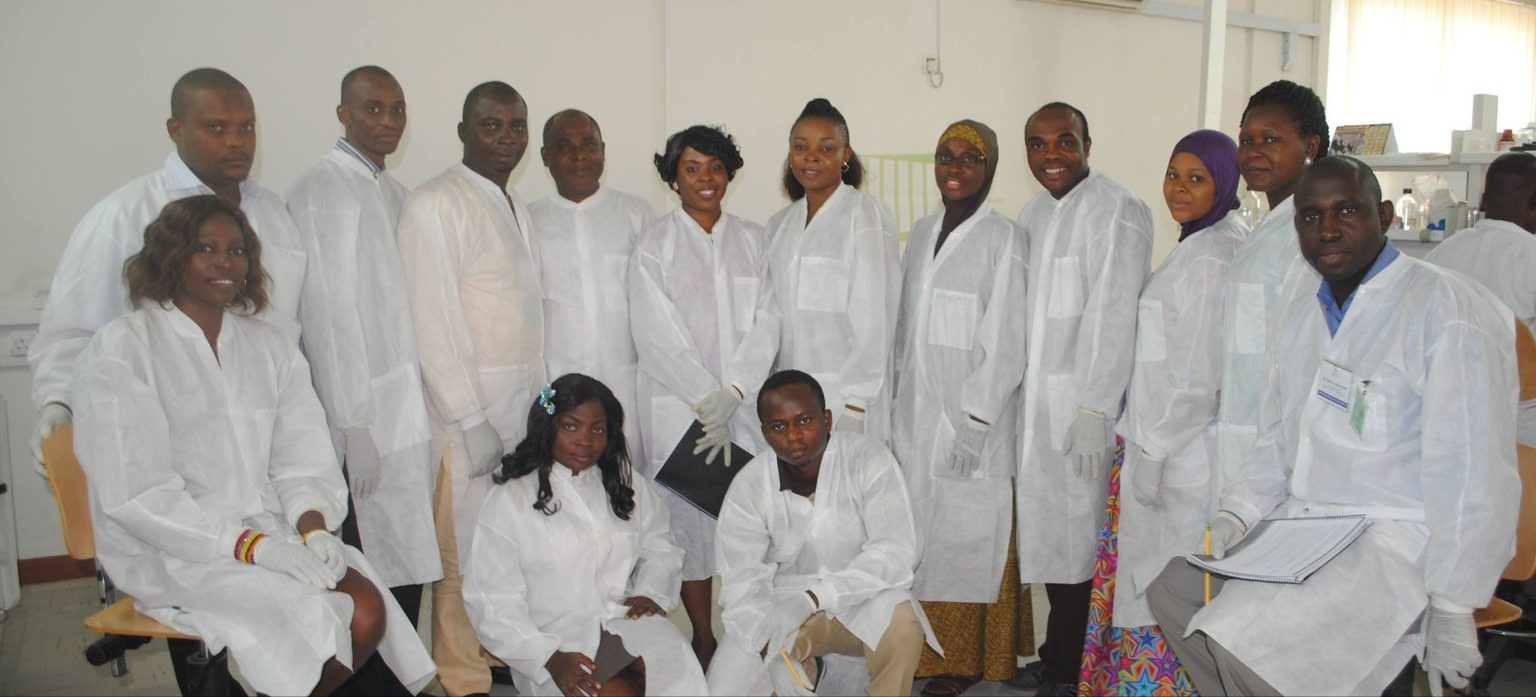
Photo: First cohort of JR Biotek Foundation’s Molecular Biotechnology Laboratory Training Programme at IITA, Nigeria (2014).

The report captures some of that journey in numbers:

  • 330+ scientists trained in person, with participants drawn from more than 25 African countries and 100+ institutions
  • 45,000+ digital learning engagements
  • 700+ smallholder farmers and agricultural extension professionals engaged
  • 50+ volunteers contributing expertise across Africa and internationally
  • £325,000+ in mission-aligned resources mobilised through grants, partnerships, sponsorship, donations and other support
  • An alumni impact survey involving 115 former participants, including 60 scientists and educators who collectively teach, train, supervise or mentor approximately 21,857 university students every year
  • 15 surveyed alumni reporting more than US$591,000 collectively leveraged through research grants, scholarships, fellowships, travel awards, equipment support and other professional opportunities.

But the most important story is what sits behind those numbers.

The Multiplier Effect

JR Biotek Foundation was founded on the conviction that talent is everywhere, but opportunity is not.

Our experience over the past decade has reinforced another important lesson: when talented people gain access to knowledge, mentorship, networks and opportunity, the benefits rarely stop with them.

Scientists become educators. Educators train students. Researchers mentor younger scientists. Collaborations generate new research. Research creates innovation. Innovation reaches farmers and communities.

That is what we call The Multiplier Effect.

Our alumni survey provides some of the clearest evidence of this ripple effect. Sixty surveyed alumni now collectively reach approximately 21,857 students annually through teaching, training, supervision and mentorship. Others have established collaborations, developed research proposals, secured funding and scholarships, progressed academically and created enterprises and initiatives of their own.
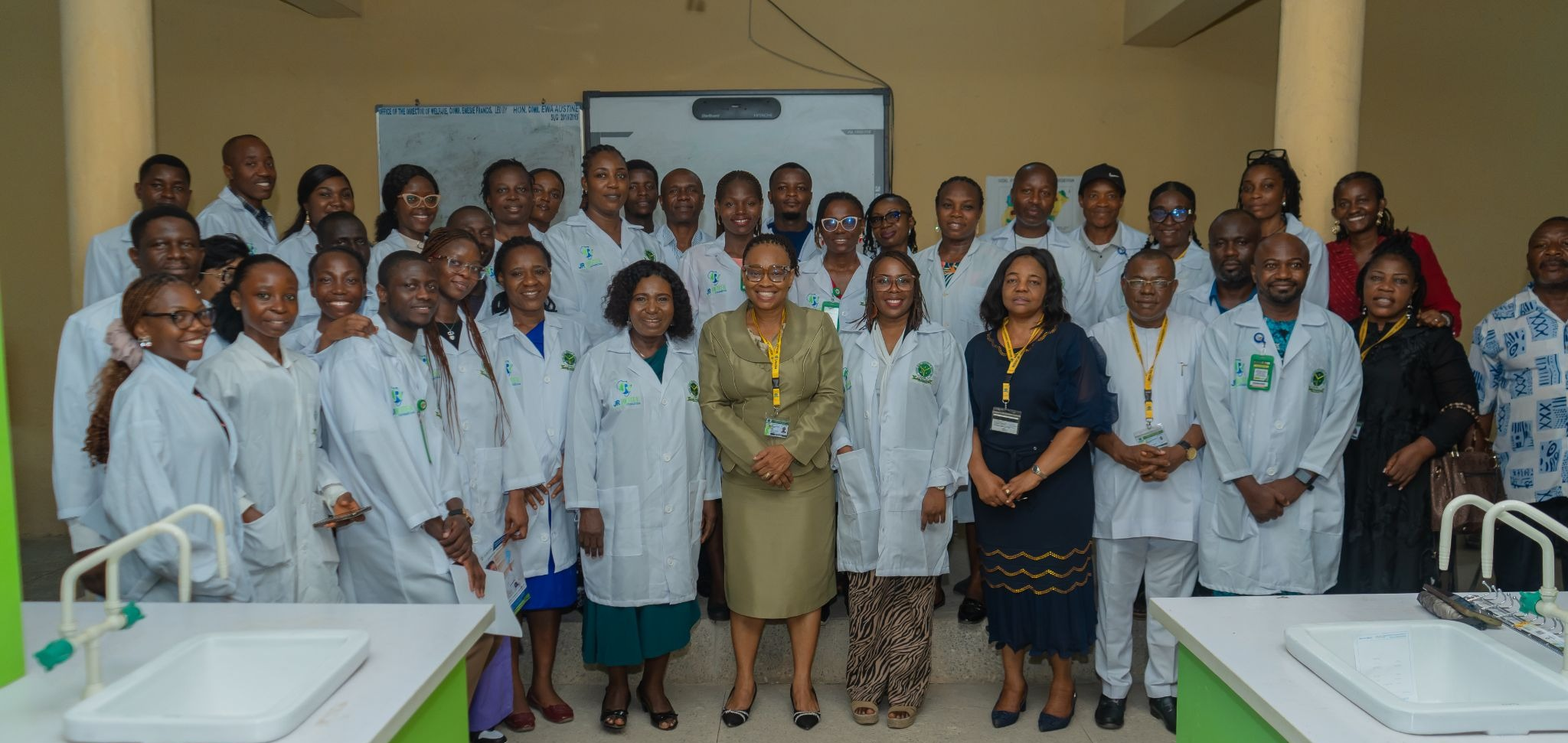
Photo: JR Biotek Foundation (Nigeria, 2026)

In their own words

The report brings these numbers to life through the experiences of scientists from across the continent.

Dr Anthony Mabele of Kenya describes becoming part of a community of scientists who continue to learn from, collaborate with and support one another:

“The Foundation’s initiatives helped me establish a strong professional network, creating reliable collaborations that will support my research endeavours well into the future.”

For Dr Obaiya Grace Utoblo of the University of Jos, Nigeria, the impact now reaches her own students:

“The knowledge gained has enabled me to teach biotechnology concepts more confidently. I regularly share JR Biotek educational resources with my students and encourage them to learn beyond the classroom.”

And Dr Jacob Ulzen of the University of Ghana describes how relationships developed through JR Biotek translated into new research opportunities:

“Through JR Biotek, I successfully secured funding from SPUN to conduct studies on mycorrhiza. The foundation also provided invaluable networking opportunities, connecting me with scientists whose collaborations continue to shape my research today.”

These are not isolated stories. Across the report, alumni from Nigeria, Ghana, Kenya, Cameroon, Benin, Ethiopia, Morocco, Burkina Faso and other African countries describe stronger laboratory skills, greater research confidence, new collaborations, mentorship, career progression and opportunities to contribute more effectively within their institutions and communities.

When a small investment travels much further

One particularly powerful example of the multiplier effect comes from EcoSeed, now Seed Services, in Benin Republic.

After winning JR Biotek Foundation’s 2018 Africa Bio-Innovation Pitch Challenge, the team received a £1,500 prize to support its ecological seed enterprise.

That relatively modest investment helped the company expand production, acquire additional land, install irrigation, recruit two full-time technicians and ultimately supply indigenous vegetable seeds to more than 2,500 farmers across southern and central Benin.

As co-founders Dr Aristide Carlos Houdegbe and Dr Dèdéou Apocalypse Tchokponhoue explain in the report:

“The cash prize enabled our start-up seed company, Ecoseed, to expand its operations and distribute high-yielding indigenous vegetable and legume seed varieties to nearly 2,500 farmers across southern and central Benin.”

It is a powerful illustration of what can happen when scientific knowledge is connected with entrepreneurship, local leadership and the right opportunity at the right time.

More than scientific training

The Impact Report also documents how JR Biotek Foundation’s work has evolved.

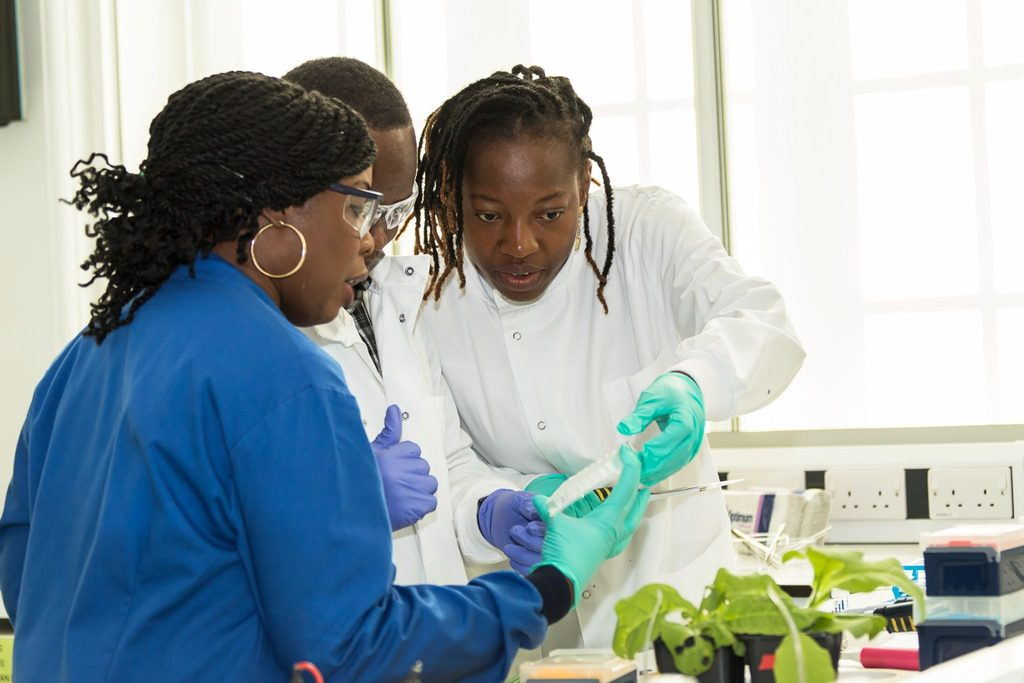
From hands-on molecular biology and bioinformatics training in Cambridge, Nigeria, Ghana, Kenya and Benin Republic, to mentorship, innovation challenges, metagenomics and genomics training, scientific convenings and farmer engagement, the Foundation has increasingly focused on what happens beyond the laboratory.

That evolution has been shaped by an important question:

How can the scientific capacity we have spent more than a decade building be connected more directly to farmers, indigenous crops, food systems and the challenges African communities are trying to solve?

That question led to AGRIIP – the Agri-Innovation & Impact Platform.

The next multiplier: AGRIIP

AGRIIP represents the next chapter of JR Biotek Foundation’s journey: connecting African scientists, farmers, entrepreneurs, institutions and communities around locally grounded, science-backed solutions for indigenous crops, climate resilience, food security and sustainable livelihoods.

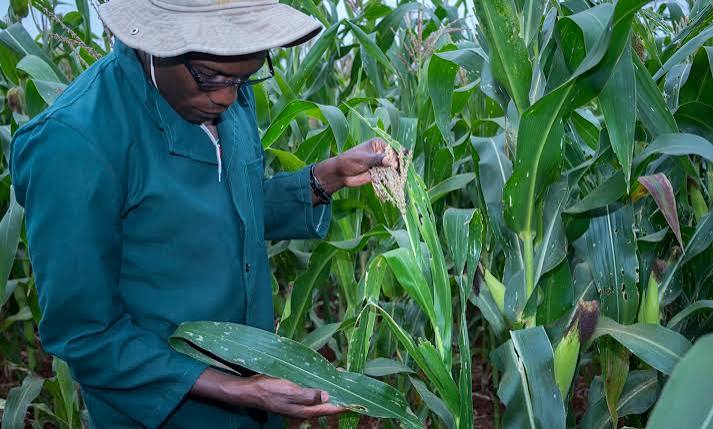
Early AGRIIP implementation is already bringing that model to life. In Nigeria, JR Biotek Foundation has combined scientific training with farmer consultations, agricultural extension engagement, climate resilience education, innovation activities and community health outreach. More than 637 farmers across six Local Government Areas in Kano State have already contributed field insights that are helping shape the next phase of AGRIIP research and innovation.

By 2036, AGRIIP aims to help:

support 10 million smallholder farmers, develop 10,000 African scientists as crop-centred innovators and translators, safeguard and add value to 30 indigenous crops, catalyse 1,000 sustainable agrifood ventures, and build engagement across 10 African countries.

The people behind the numbers

Perhaps the most important message of the report is that none of this impact belongs to JR Biotek Foundation alone. It belongs to the scientists who took what they learned and taught others.

To the alumni who returned as trainers, mentors and volunteer leaders; the universities and research institutes that opened their laboratories and institutions; the volunteers who contributed thousands of hours of expertise; the mentors, donors, technical partners and collaborators who created opportunities, and increasingly, to the farmers and communities whose knowledge and priorities are helping shape what we do next.

As the report reflects:

“The true measure of impact is not the number of people we reach directly. It is the number of lives they go on to influence.”

The next decade starts now

Our first decade was about investing in people. Our next is about connecting those people, with farmers, indigenous knowledge, entrepreneurship, institutions and communities, to build stronger and more resilient African food systems.

The JR Biotek Foundation 2015–2026 Impact Report: The Multiplier Effect celebrates what our community has built together while setting out the ambition for what comes next.

To every scientist, student, farmer, volunteer, mentor, donor, collaborator, institution and supporter who has been part of this journey: thank you. This is your impact story too.

The first decade built people. The next decade begins with AGRIIP.
News & Stories

Stay up to date with our latest scientific training programmes, farmer engagement activities, research and innovation, alumni achievements and partnerships and events.

April 3, 2025

Roots of Resilience: Celebrating a Decade of Science, Partnership and African-Led Innovation

Cambridge, 27 March 2025 — At the University of Cambridge, JR Biotek Foundation marked its tenth anniversary with Roots of Resilience: A Decade of Innovation & Impact, a day-long gathering of scientists, policy experts, business practitioners, artists, alumni and partners from Africa and around the world.
April 5, 2025

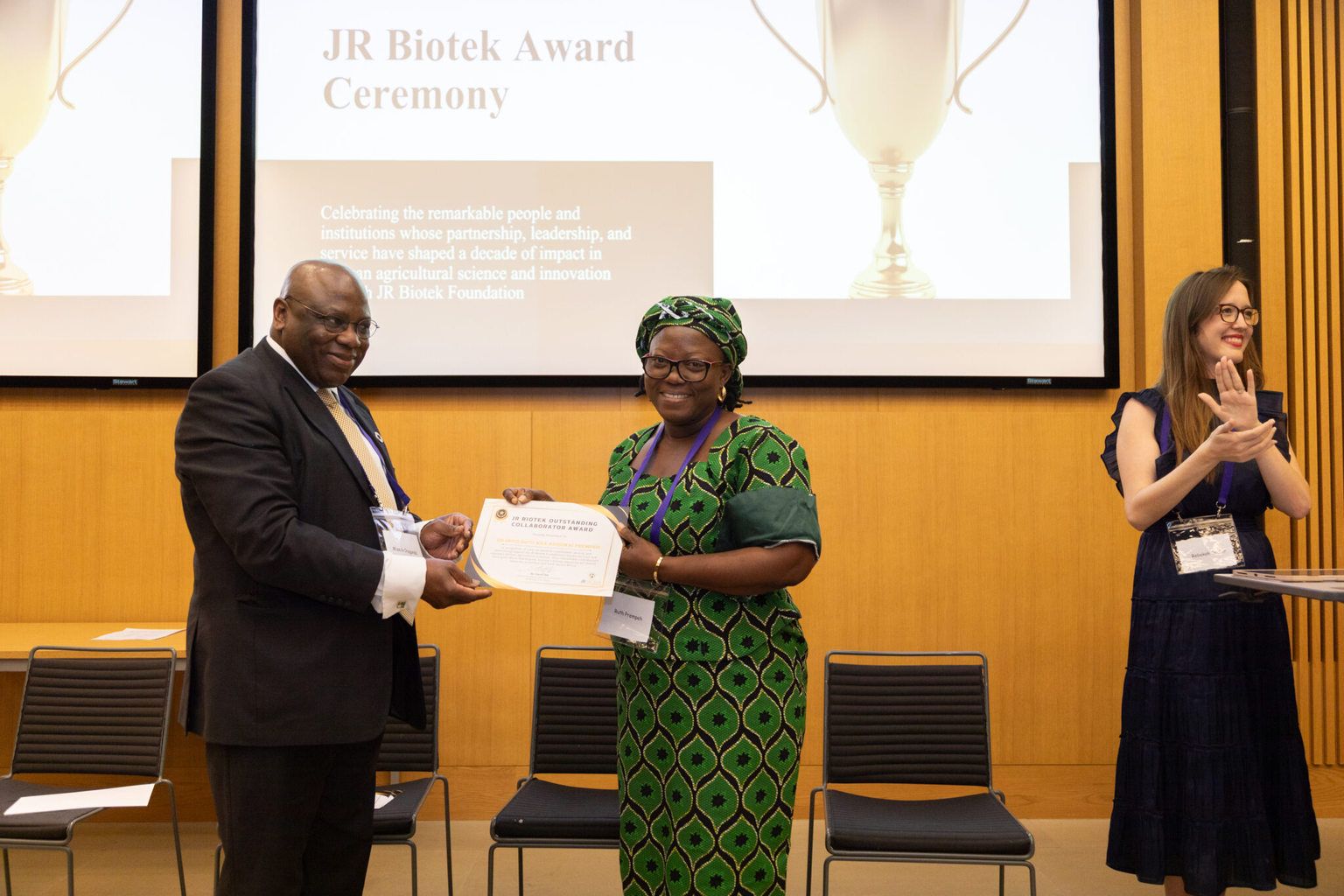
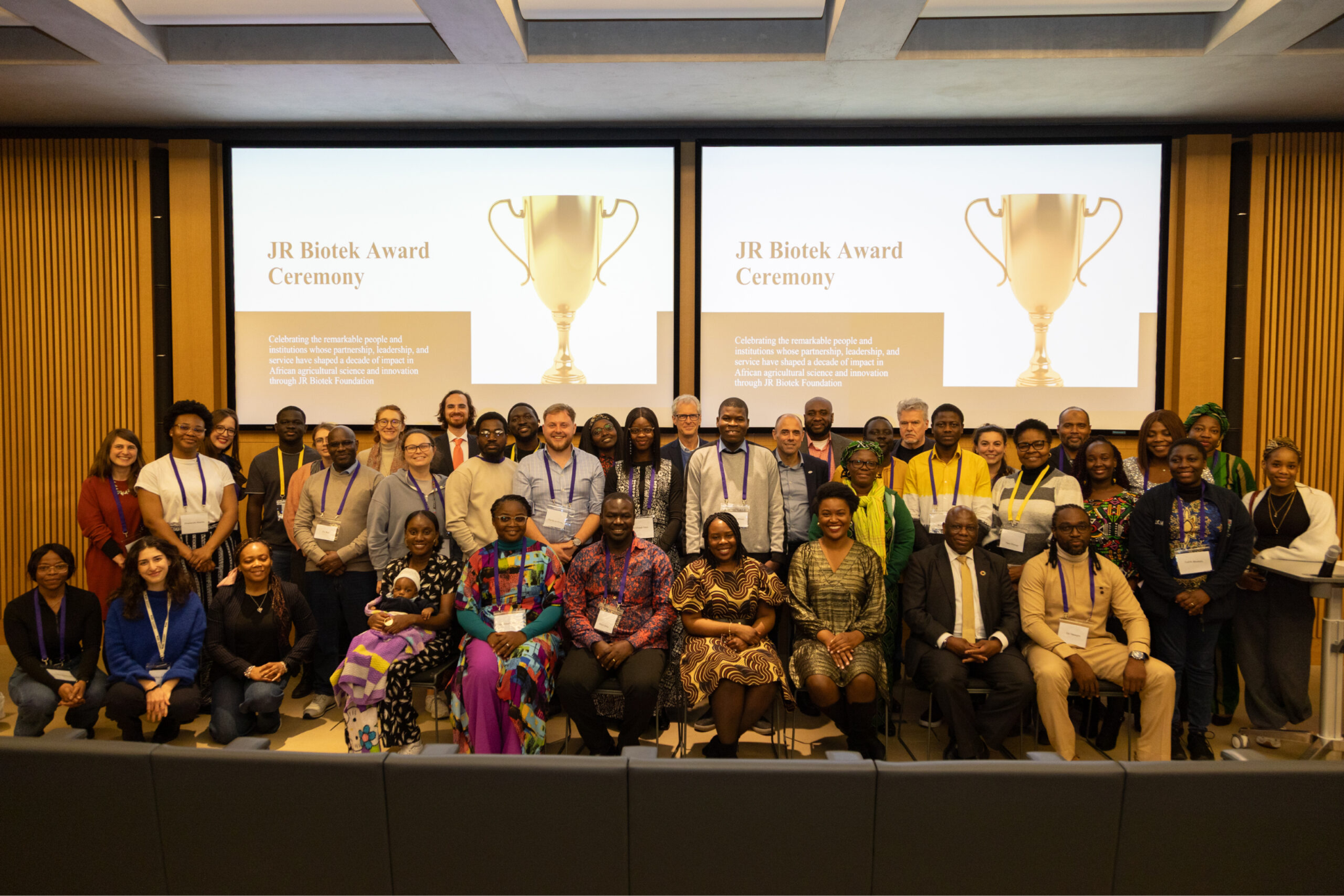
JR Biotek Awards Honour a Decade of Partnership, Service and Excellence in African Science

For ten years, JR Biotek Foundation’s work has been built not only through programmes, but through people, scientists who mentor others, institutions that open their laboratories and networks, volunteers who give their time, and partners who believe that strengthening African science can transform lives and food systems.
October 2, 2025

JR Biotek Foundation Launches AGRIIP: A 10-Year Mission to Reimagine Africa’s Food Future

JR Biotek Foundation has launched the Agri-Innovation & Impact Platform (AGRIIP), an ambitious 10-year initiative bringing together African scientists, farmers, entrepreneurs and institutions to develop science-backed solutions to some of the most pressing challenges facing African agriculture and food systems.
Scroll to Top

Subscribe to our newsletter

* indicates required
Consent & Privacy

JR Biotek Foundation Releases 2015-2026 Impact Report: The Multiplier Effect

By JR Biotek Foundation

What happens when you invest in one scientist? They conduct research. They teach students. They mentor other scientists. They build collaborations. They secure funding. They develop innovations. And, over time, the impact of one opportunity can reach thousands of people.

JR Biotek Foundation Releases 2015-2026 Impact Report: The Multiplier Effect

By JR Biotek Foundation, September 2026

What happens when you invest in one scientist? They conduct research. They teach students. They mentor other scientists. They build collaborations. They secure funding. They develop innovations. And, over time, the impact of one opportunity can reach thousands of people.

This is the story at the heart of JR Biotek Foundation’s newly released 2015–2026 Impact Report, The Multiplier Effect a reflection on more than a decade of scientific capacity building, leadership development and agricultural innovation across Africa.

From one training programme to a pan-African network

JR Biotek Foundation’s journey began with a molecular biotechnology training workshop at the International Institute of Tropical Agriculture (IITA) in Ibadan, Nigeria, in 2014, before the Foundation was formally established in 2015.

Since then, the Foundation has grown into a network spanning more than 25 African countries and 100+ universities and research institutions, bringing together scientists, educators, mentors, innovators, volunteers, farmers and institutional partners.

Photo: First cohort of JR Biotek Foundation’s Molecular Biotechnology Laboratory Training Programme at IITA, Nigeria (2014).

The report captures some of that journey in numbers:

  • 330+ scientists trained in person, with participants drawn from more than 25 African countries and 100+ institutions
  • 45,000+ digital learning engagements
  • 700+ smallholder farmers and agricultural extension professionals engaged
  • 50+ volunteers contributing expertise across Africa and internationally
  • £325,000+ in mission-aligned resources mobilised through grants, partnerships, sponsorship, donations and other support
  • An alumni impact survey involving 115 former participants, including 60 scientists and educators who collectively teach, train, supervise or mentor approximately 21,857 university students every year
  • 15 surveyed alumni reporting more than US$591,000 collectively leveraged through research grants, scholarships, fellowships, travel awards, equipment support and other professional opportunities.

But the most important story is what sits behind those numbers.

The Multiplier Effect

JR Biotek Foundation was founded on the conviction that talent is everywhere, but opportunity is not.

Our experience over the past decade has reinforced another important lesson: when talented people gain access to knowledge, mentorship, networks and opportunity, the benefits rarely stop with them.

Scientists become educators. Educators train students. Researchers mentor younger scientists. Collaborations generate new research. Research creates innovation. Innovation reaches farmers and communities.

That is what we call The Multiplier Effect.

Our alumni survey provides some of the clearest evidence of this ripple effect. Sixty surveyed alumni now collectively reach approximately 21,857 students annually through teaching, training, supervision and mentorship. Others have established collaborations, developed research proposals, secured funding and scholarships, progressed academically and created enterprises and initiatives of their own.

Photo: JR Biotek Foundation (Nigeria, 2026)

In their own words

The report brings these numbers to life through the experiences of scientists from across the continent.

Dr Anthony Mabele of Kenya describes becoming part of a community of scientists who continue to learn from, collaborate with and support one another:

“The Foundation’s initiatives helped me establish a strong professional network, creating reliable collaborations that will support my research endeavours well into the future.”

For Dr Obaiya Grace Utoblo of the University of Jos, Nigeria, the impact now reaches her own students:

“The knowledge gained has enabled me to teach biotechnology concepts more confidently. I regularly share JR Biotek educational resources with my students and encourage them to learn beyond the classroom.”

And Dr Jacob Ulzen of the University of Ghana describes how relationships developed through JR Biotek translated into new research opportunities:

“Through JR Biotek, I successfully secured funding from SPUN to conduct studies on mycorrhiza. The foundation also provided invaluable networking opportunities, connecting me with scientists whose collaborations continue to shape my research today.”

These are not isolated stories. Across the report, alumni from Nigeria, Ghana, Kenya, Cameroon, Benin, Ethiopia, Morocco, Burkina Faso and other African countries describe stronger laboratory skills, greater research confidence, new collaborations, mentorship, career progression and opportunities to contribute more effectively within their institutions and communities.

When a small investment travels much further

One particularly powerful example of the multiplier effect comes from EcoSeed, now Seed Services, in Benin Republic.

After winning JR Biotek Foundation’s 2018 Africa Bio-Innovation Pitch Challenge, the team received a £1,500 prize to support its ecological seed enterprise.

That relatively modest investment helped the company expand production, acquire additional land, install irrigation, recruit two full-time technicians and ultimately supply indigenous vegetable seeds to more than 2,500 farmers across southern and central Benin.

As co-founders Dr Aristide Carlos Houdegbe and Dr Dèdéou Apocalypse Tchokponhoue explain in the report:

“The cash prize enabled our start-up seed company, Ecoseed, to expand its operations and distribute high-yielding indigenous vegetable and legume seed varieties to nearly 2,500 farmers across southern and central Benin.”

It is a powerful illustration of what can happen when scientific knowledge is connected with entrepreneurship, local leadership and the right opportunity at the right time.

More than scientific training

The Impact Report also documents how JR Biotek Foundation’s work has evolved.

From hands-on molecular biology and bioinformatics training in Cambridge, Nigeria, Ghana, Kenya and Benin Republic, to mentorship, innovation challenges, metagenomics and genomics training, scientific convenings and farmer engagement, the Foundation has increasingly focused on what happens beyond the laboratory.

That evolution has been shaped by an important question:

How can the scientific capacity we have spent more than a decade building be connected more directly to farmers, indigenous crops, food systems and the challenges African communities are trying to solve?

That question led to AGRIIP – the Agri-Innovation & Impact Platform.

The next multiplier: AGRIIP

AGRIIP represents the next chapter of JR Biotek Foundation’s journey: connecting African scientists, farmers, entrepreneurs, institutions and communities around locally grounded, science-backed solutions for indigenous crops, climate resilience, food security and sustainable livelihoods.

Early AGRIIP implementation is already bringing that model to life. In Nigeria, JR Biotek Foundation has combined scientific training with farmer consultations, agricultural extension engagement, climate resilience education, innovation activities and community health outreach. More than 637 farmers across six Local Government Areas in Kano State have already contributed field insights that are helping shape the next phase of AGRIIP research and innovation.

By 2036, AGRIIP aims to help:

support 10 million smallholder farmers, develop 10,000 African scientists as crop-centred innovators and translators, safeguard and add value to 30 indigenous crops, catalyse 1,000 sustainable agrifood ventures, and build engagement across 10 African countries.

The people behind the numbers

Perhaps the most important message of the report is that none of this impact belongs to JR Biotek Foundation alone. It belongs to the scientists who took what they learned and taught others.

To the alumni who returned as trainers, mentors and volunteer leaders; the universities and research institutes that opened their laboratories and institutions; the volunteers who contributed thousands of hours of expertise; the mentors, donors, technical partners and collaborators who created opportunities, and increasingly, to the farmers and communities whose knowledge and priorities are helping shape what we do next.

As the report reflects:

“The true measure of impact is not the number of people we reach directly. It is the number of lives they go on to influence.”

The next decade starts now

Our first decade was about investing in people. Our next is about connecting those people, with farmers, indigenous knowledge, entrepreneurship, institutions and communities, to build stronger and more resilient African food systems.

The JR Biotek Foundation 2015–2026 Impact Report: The Multiplier Effect celebrates what our community has built together while setting out the ambition for what comes next.

To every scientist, student, farmer, volunteer, mentor, donor, collaborator, institution and supporter who has been part of this journey: thank you. This is your impact story too.

The first decade built people. The next decade begins with AGRIIP.