Scientists and Farmers Should Not Exist in Separate Worlds

By Christianah Oseni

From listening to Nigerian farmers as an undergraduate to studying crop resilience at Cambridge, Christianah Oseni reflects on the experiences shaping her science, and why she chose to volunteer with JR Biotek Foundation.

We went to the farmers excited about what we had learned.

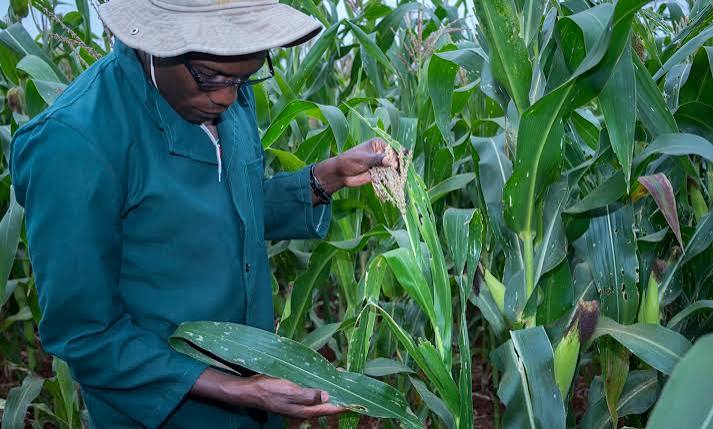
As an undergraduate agriculture student in Nigeria, I was learning about improved crop varieties, integrated pest management and other approaches that could help farmers improve productivity. We were eager to share these possibilities. But when we spoke with the farmers, they helped me see the problem differently.

They understood the value of improved seeds, but they also had a practical concern. They wanted crops that performed well, but that they could save, replant the following season and continue to obtain good performance from. Having to purchase new seed every growing season was expensive and not necessarily what they needed. It was a simple conversation, but it changed how I thought about agricultural research.

Interestingly, agriculture was not something I had always planned to pursue. I did not have one favourite subject or a particular career that had always stood out to me. As God would have it, I found myself studying agriculture at Obafemi Awolowo University (Nigeria), and I decided to give it my best. Over time, agriculture became much more than the degree I happened to study.

My interaction with farmers was important in that transition. We had approached them thinking about what science could offer, but they reminded me that good agricultural research must also begin by understanding what people actually need.

Their concerns contributed to my interest in inheritance and crop improvement, and my undergraduate research investigated the genetic heritability of agronomic traits among 130 white maize testcrosses evaluated under terminal drought conditions.

That experience established an idea that has stayed with me ever since: Scientists and farmers should not exist in separate worlds.

My early experiences in agriculture in Nigeria shaped how I think about the relationship between research and farmers’ realities.

For me, agricultural research should have a strong bottom-up component. We should listen to farmers, translate the problems they face into research questions, investigate them scientifically and find ways of taking useful solutions back to the people who need them.

Today, as a doctoral researcher, I study natural variation in transient carbohydrate partitioning in wheat and its potential relevance to climate resilience. The scientific questions have changed, but one question remains important to me: how can the science we do ultimately contribute to more resilient crops, agricultural systems and livelihoods?

Finding JR Biotek Foundation

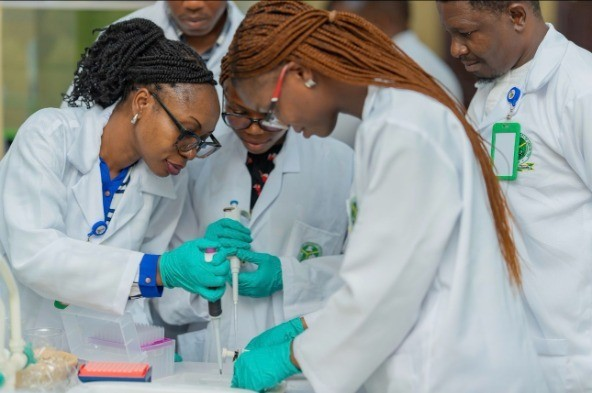
My relationship with JR Biotek Foundation began with a simple decision to volunteer. Shortly after I arrived at the University of Cambridge, a senior colleague who had recently graduated told me about an opportunity to volunteer for Roots of Resilience, an event celebrating JR Biotek Foundation’s tenth anniversary.

I looked into the Foundation and was drawn to its commitment to using science to address agricultural challenges while investing in people and communities. So I volunteered.

That decision grew into deeper involvement with JR Biotek Foundation and AGRIIP – the Agri-Innovation & Impact Platform. Today, I am part of the AGRIIP Research Fellowship team and have also volunteered in training activities supporting young scientists and graduates.

This work matters to me because people have shown up for me. Throughout my education and career, people have shared their knowledge, created opportunities, offered guidance and invested in my development. I want to show up for other people too.
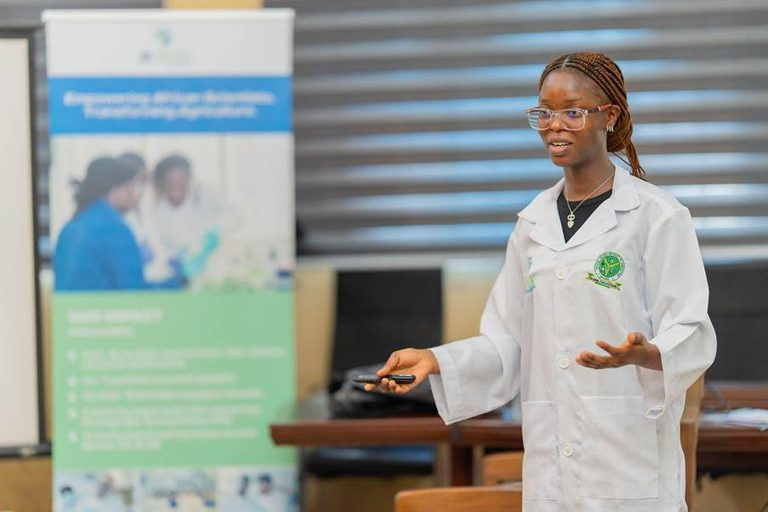
Photo: Christianah teaching during JR Biotek Foundation’s scientific laboratory training programme in Nigeria (2026)

For me, strengthening African agriculture also means investing in the people who will take its science and innovation forward.

The Future I Hope to Contribute To

I want to see an African agricultural system where farmers and scientists work closely together, where farmers’ experiences help shape research priorities, and where scientists think beyond the experiment or publication to ask: Who could use this knowledge? What problem could it help solve?

I also want more young people to see agriculture as a space where they can build meaningful careers and improve the world.

Building African agriculture is not only about developing better crops and technologies. We must also build people who have the skills, opportunities and confidence to tackle the challenges facing our food systems.

And as we improve agricultural productivity, we must protect the environment that sustains it. The agriculture we build must be productive, climate-resilient and environmentally sustainable. Ultimately, our science should contribute to more secure food systems, more resilient farms, improved livelihoods and healthier communities across Africa.

My journey into agriculture did not begin with a childhood dream of becoming an agricultural scientist. But along the way, I found the kind of contribution I want to make.

I want to help build a future where we listen before we innovate, translate knowledge into impact and invest in people as deliberately as we invest in science. Because research can become more than knowledge. It can become change.
News & Stories

Stay up to date with our latest scientific training programmes, farmer engagement activities, research and innovation, alumni achievements and partnerships and events.

April 3, 2025

Roots of Resilience: Celebrating a Decade of Science, Partnership and African-Led Innovation

Cambridge, 27 March 2025 — At the University of Cambridge, JR Biotek Foundation marked its tenth anniversary with Roots of Resilience: A Decade of Innovation & Impact, a day-long gathering of scientists, policy experts, business practitioners, artists, alumni and partners from Africa and around the world.
April 5, 2025

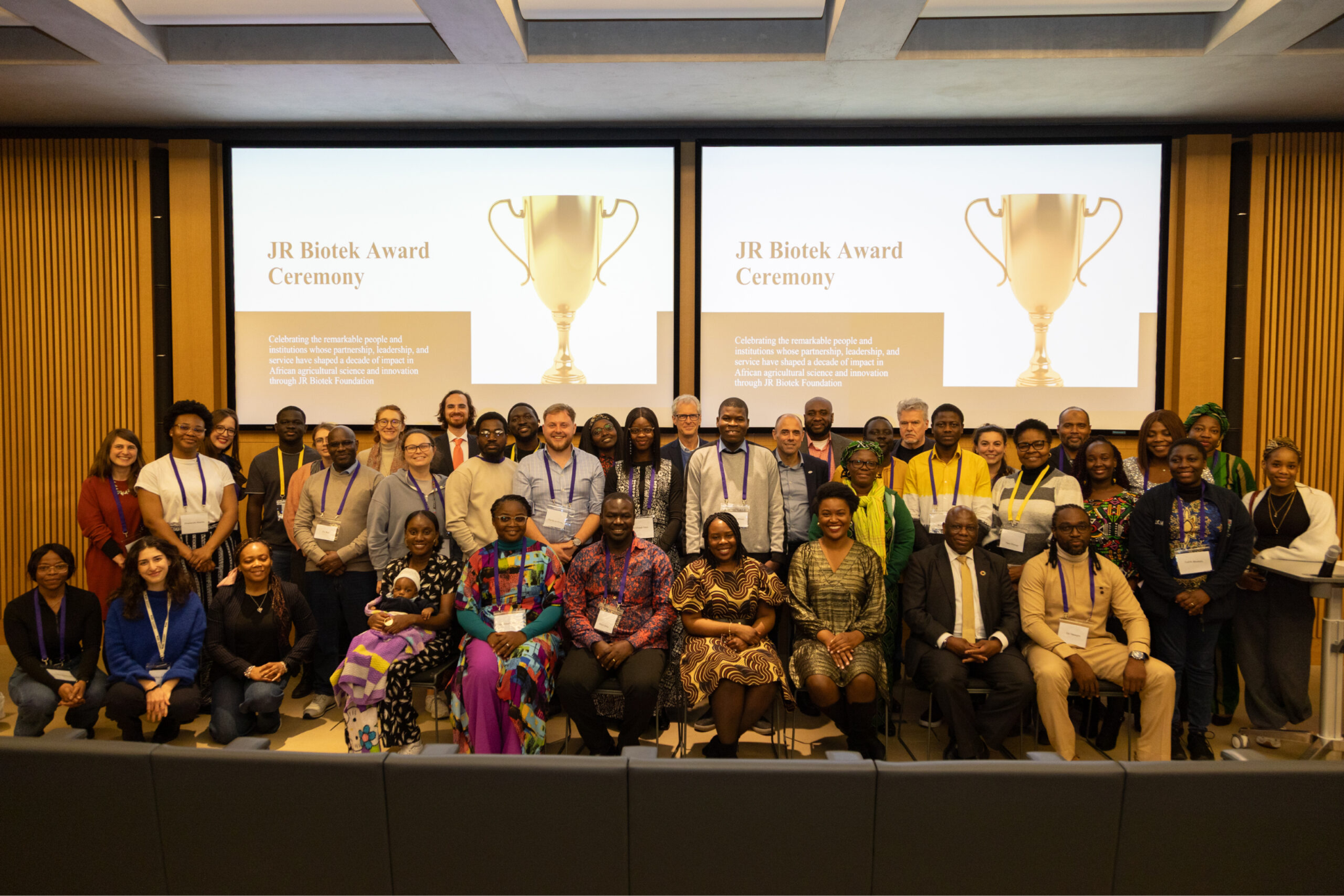
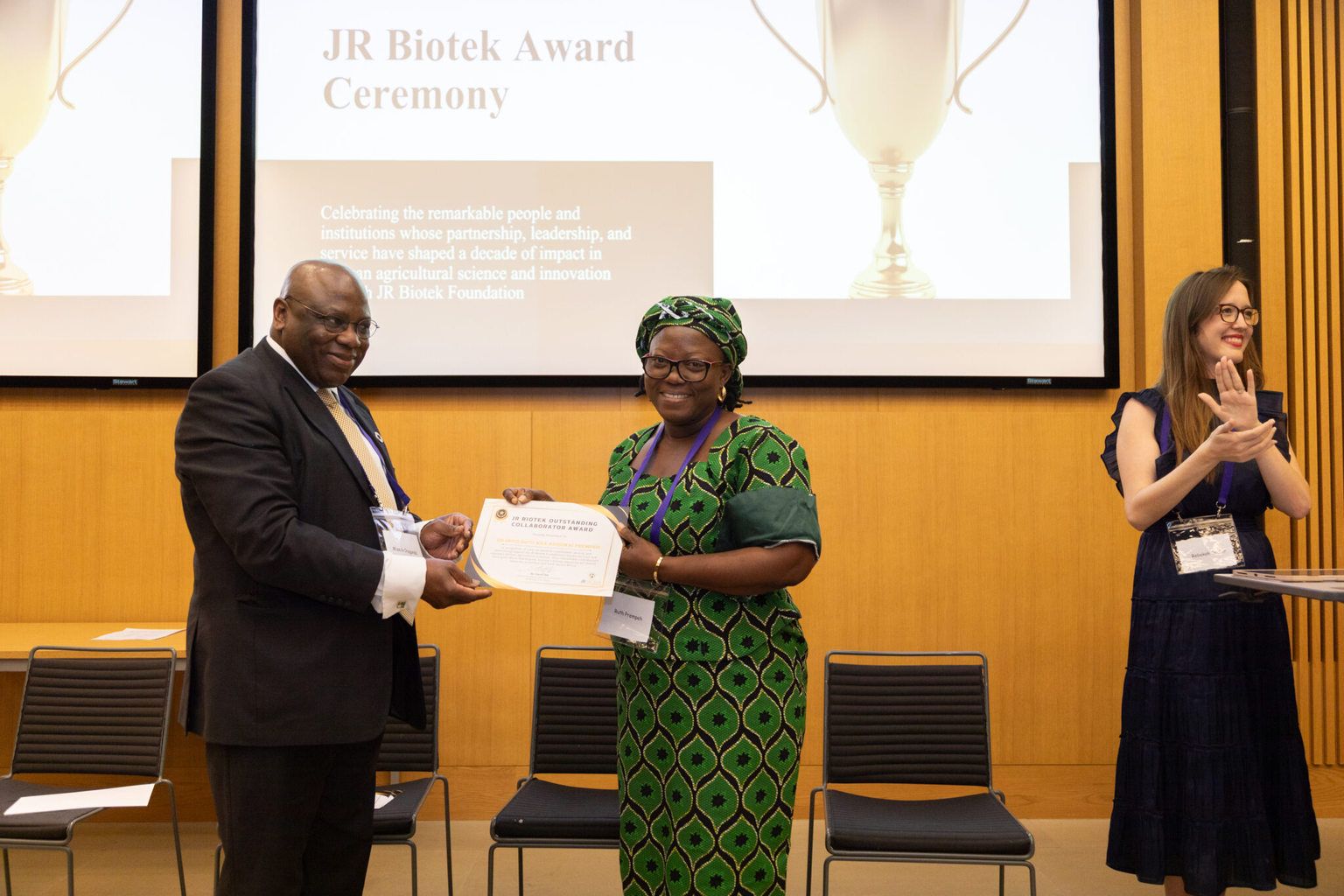
JR Biotek Awards Honour a Decade of Partnership, Service and Excellence in African Science

For ten years, JR Biotek Foundation’s work has been built not only through programmes, but through people, scientists who mentor others, institutions that open their laboratories and networks, volunteers who give their time, and partners who believe that strengthening African science can transform lives and food systems.
October 2, 2025

JR Biotek Foundation Launches AGRIIP: A 10-Year Mission to Reimagine Africa’s Food Future

JR Biotek Foundation has launched the Agri-Innovation & Impact Platform (AGRIIP), an ambitious 10-year initiative bringing together African scientists, farmers, entrepreneurs and institutions to develop science-backed solutions to some of the most pressing challenges facing African agriculture and food systems.
Scroll to Top

Subscribe to our newsletter

* indicates required
Consent & Privacy

Scientists and Farmers Should Not Exist in Separate Worlds

By JR Biotek Foundation

From listening to Nigerian farmers as an undergraduate to studying crop resilience at Cambridge, Christianah Oseni reflects on the experiences shaping her science, and why she chose to volunteer with JR Biotek Foundation.

Scientists and Farmers Should Not Exist in Separate Worlds

By Christianah Oseni

From listening to Nigerian farmers as an undergraduate to studying crop resilience at Cambridge, Christianah Oseni reflects on the experiences shaping her science, and why she chose to volunteer with JR Biotek Foundation.

We went to the farmers excited about what we had learned.

As an undergraduate agriculture student in Nigeria, I was learning about improved crop varieties, integrated pest management and other approaches that could help farmers improve productivity. We were eager to share these possibilities. But when we spoke with the farmers, they helped me see the problem differently.

They understood the value of improved seeds, but they also had a practical concern. They wanted crops that performed well, but that they could save, replant the following season and continue to obtain good performance from. Having to purchase new seed every growing season was expensive and not necessarily what they needed. It was a simple conversation, but it changed how I thought about agricultural research.

Interestingly, agriculture was not something I had always planned to pursue. I did not have one favourite subject or a particular career that had always stood out to me. As God would have it, I found myself studying agriculture at Obafemi Awolowo University (Nigeria), and I decided to give it my best. Over time, agriculture became much more than the degree I happened to study.

My interaction with farmers was important in that transition. We had approached them thinking about what science could offer, but they reminded me that good agricultural research must also begin by understanding what people actually need.

Their concerns contributed to my interest in inheritance and crop improvement, and my undergraduate research investigated the genetic heritability of agronomic traits among 130 white maize testcrosses evaluated under terminal drought conditions.

That experience established an idea that has stayed with me ever since: Scientists and farmers should not exist in separate worlds.

My early experiences in agriculture in Nigeria shaped how I think about the relationship between research and farmers’ realities.

For me, agricultural research should have a strong bottom-up component. We should listen to farmers, translate the problems they face into research questions, investigate them scientifically and find ways of taking useful solutions back to the people who need them.

Today, as a doctoral researcher, I study natural variation in transient carbohydrate partitioning in wheat and its potential relevance to climate resilience. The scientific questions have changed, but one question remains important to me: how can the science we do ultimately contribute to more resilient crops, agricultural systems and livelihoods?

Finding JR Biotek Foundation

My relationship with JR Biotek Foundation began with a simple decision to volunteer. Shortly after I arrived at the University of Cambridge, a senior colleague who had recently graduated told me about an opportunity to volunteer for Roots of Resilience, an event celebrating JR Biotek Foundation’s tenth anniversary.

I looked into the Foundation and was drawn to its commitment to using science to address agricultural challenges while investing in people and communities. So I volunteered.

That decision grew into deeper involvement with JR Biotek Foundation and AGRIIP – the Agri-Innovation & Impact Platform. Today, I am part of the AGRIIP Research Fellowship team and have also volunteered in training activities supporting young scientists and graduates.

This work matters to me because people have shown up for me. Throughout my education and career, people have shared their knowledge, created opportunities, offered guidance and invested in my development. I want to show up for other people too.

Photo: Christianah teaching during JR Biotek Foundation’s scientific laboratory training programme in Nigeria (2026)

For me, strengthening African agriculture also means investing in the people who will take its science and innovation forward.

The Future I Hope to Contribute To

I want to see an African agricultural system where farmers and scientists work closely together, where farmers’ experiences help shape research priorities, and where scientists think beyond the experiment or publication to ask: Who could use this knowledge? What problem could it help solve?

I also want more young people to see agriculture as a space where they can build meaningful careers and improve the world.

Building African agriculture is not only about developing better crops and technologies. We must also build people who have the skills, opportunities and confidence to tackle the challenges facing our food systems.

And as we improve agricultural productivity, we must protect the environment that sustains it. The agriculture we build must be productive, climate-resilient and environmentally sustainable. Ultimately, our science should contribute to more secure food systems, more resilient farms, improved livelihoods and healthier communities across Africa.

My journey into agriculture did not begin with a childhood dream of becoming an agricultural scientist. But along the way, I found the kind of contribution I want to make.

I want to help build a future where we listen before we innovate, translate knowledge into impact and invest in people as deliberately as we invest in science. Because research can become more than knowledge. It can become change.